The Core Distinction
- Glycemic Index (GI) = how fast a food raises blood glucose
- Glycemic Load (GL) = how much glucose a typical portion delivers
👉 GI = speed
👉 GL = total metabolic impact
Glycemic Index (GI)
Definition:
Relative ranking (0–100) of how quickly a food raises blood glucose compared to pure glucose.
Categories:
- Low: ≤55
- Moderate: 56–69
- High: ≥70
Examples:
- Basmati rice → lower GI
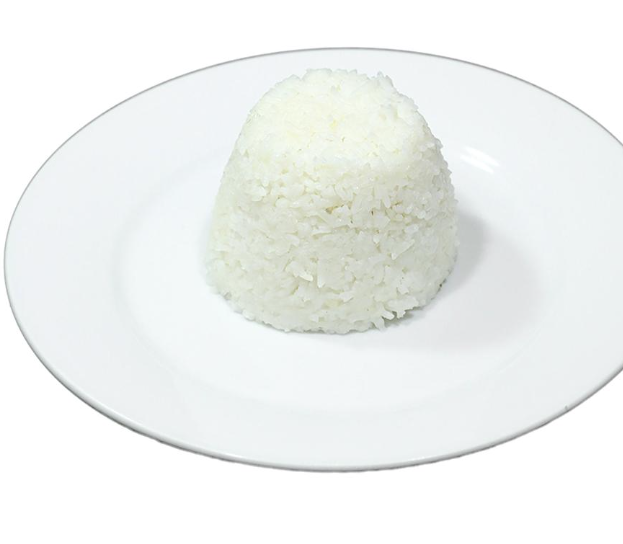
- Jasmine rice → high GI
- Lentils → low GI
Limitation:
GI ignores portion size.
Glycemic Load (GL)

Definition:
GL = (GI × grams of carbohydrate per serving) ÷ 100
Categories:
- Low: ≤10
- Moderate: 11–19
- High: ≥20
Key Insight:
A food can have:
- High GI but low GL → small portion
- Moderate GI but high GL → large portion
Clinical Reality
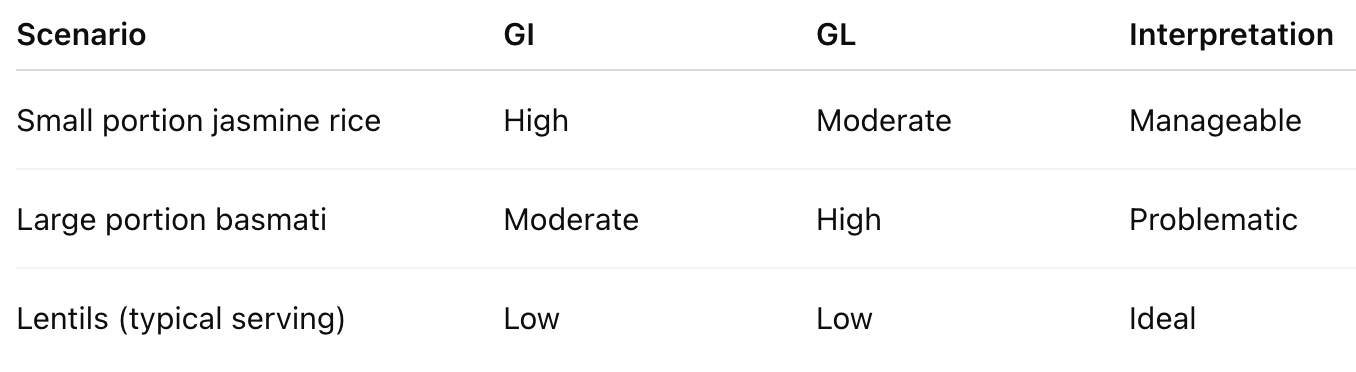
👉 Portion size often matters more than GI alone
Why This Matters
Modern diets combine:
- High-GI foods
- Large portions
- Frequent intake
This creates:
- Repeated glucose spikes
- Chronic insulin exposure
- Progressive metabolic dysfunction
The Food Matrix Effect
Glycemic Index is not fixed. It changes when foods are eaten with:
- Protein
- Fat
- Fiber
Example:
- Rice alone → high spike
- Rice + legumes + vegetables → reduced spike
Practical Clinical Strategy
Step 1 — Choose Lower GI When Possible
- Basmati > jasmine
- Steel-cut oats > instant oats
- Whole grains > refined flour
Step 2 — Control Glycemic Load
- Reduce portion size
- Avoid stacking multiple starches
Step 3 — Modify the Meal
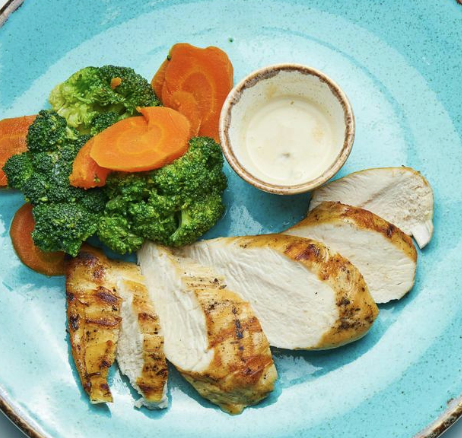
- Add protein (fish, eggs, legumes)
- Add fiber (vegetables)
- Add fat (olive oil, nuts)
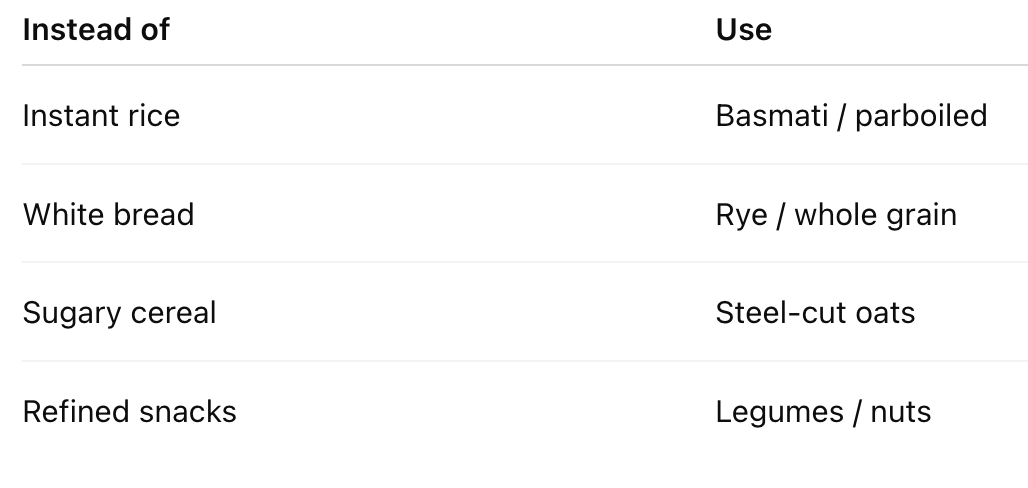
High-Yield Swaps
Clinical Pearl
A “healthy” food can still be metabolically harmful
if consumed in large amounts, frequently, and in isolation.
Bottom Line
- GI tells you how fast
- GL tells you how much
- Real-world risk = GI + portion + frequency + context
Suggested Internal Links
Glycemic Load Puts Glycemic Index Into Real Meal Context
Summary: Glycemic index describes how fast a carbohydrate food can raise blood glucose under test conditions. Glycemic load adds the amount of carbohydrate in a real serving.
This distinction matters because a food may have a high glycemic index but contain little carbohydrate per usual serving, while a large portion of a lower-index food may still create a high glucose load. Fiber, intact food structure, fat, protein, fermentation, cooling, reheating, and meal pairing can all alter the observed response.
Rice studies show why preparation should be mentioned carefully. Cooling cooked white rice can increase resistant starch, and some small human studies found lower post-meal glucose responses after cooled and reheated rice. That does not make rice automatically harmless; it means variety, portion, preparation, and the total meal all matter.
Plain answer: glycemic index is about speed; glycemic load is about speed plus amount. For practical food choices, portion size and food structure usually matter as much as the index number.
Sources: Harvard Health Publishing, Glycemic index and glycemic load explainer; Sonia S. et al., cooled rice and glycemic response, 2015, PMID 26693746; Kaluza J. et al., cooled rice in type 1 diabetes, 2022, PMID 35429987.
Key takeaways. Glycemic index describes carbohydrate quality under standardized testing, while glycemic load combines that quality with the amount of available carbohydrate in a serving. Neither measure captures the whole nutritional value of a food.
How Glycemic Index Is Measured
Glycemic index compares the rise in blood glucose after a portion containing a standardized amount of available carbohydrate with the response to a reference food, usually glucose. A value is an average obtained under controlled conditions. It is not the percentage of a food that becomes sugar, and it is not a measure of calories.
Calculating Glycemic Load
Glycemic load is commonly calculated as: GI × grams of available carbohydrate in the serving ÷ 100. Watermelon can have a moderately high GI but a low glycemic load in an ordinary portion because it contains relatively little carbohydrate by weight. A large serving of a lower-GI food can still produce a substantial load.
Why Values Vary
- Variety and amylose content
- Particle size and milling
- Ripeness
- Cooking time and temperature
- Cooling and reheating
- Meal fat, protein, fibre and acidity
- Individual glucose regulation and gut physiology
Published tables are therefore useful guides rather than exact predictions. The response of a person with diabetes may differ from that of the healthy volunteers used in a particular test.
Clinical Strengths and Limitations
GI and GL can help compare similar carbohydrate foods and design lower-glycaemic dietary patterns. They do not measure sodium, micronutrients, protein quality, degree of processing or environmental sustainability. A low-GI confectionery product is not necessarily more nutritious than fruit, legumes or vegetables.
For diabetes management, portion size, total carbohydrate, medicines, activity and timing remain important. Continuous glucose monitoring can reveal individual patterns, but isolated peaks should be interpreted in clinical context rather than treated as diagnoses.