Food Subsection Navigation
Food • Evolution and Diet • Ancestral Foods • Modern Diet • NOVA and Ultra-Processed Foods • Sugar History • Sugary Drinks • Starches • Rice • Bread • Root Crops • Legumes • Nuts • Genes and Food • Dietary Guidelines
Introduction
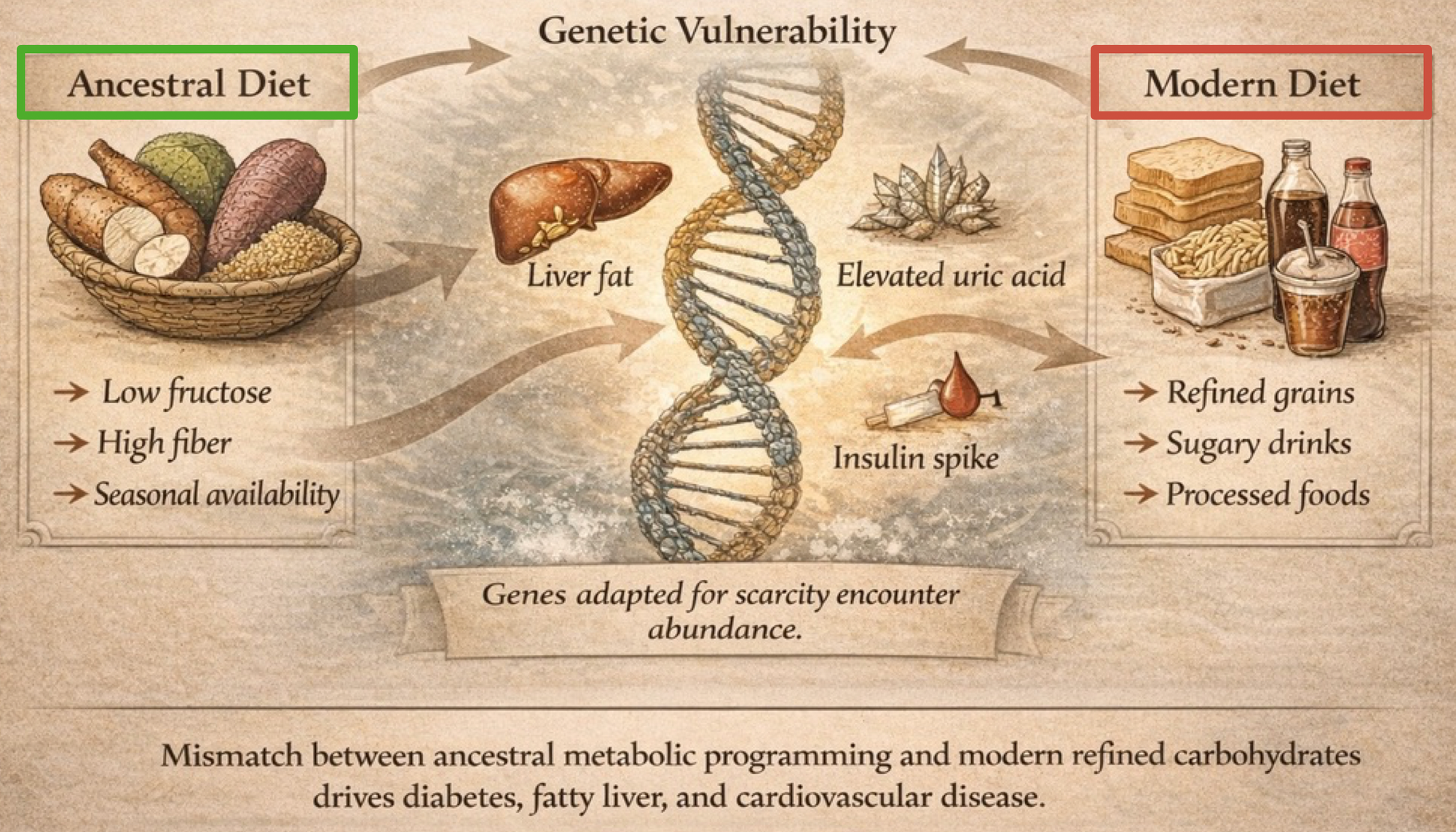
The term Western diet is commonly used to describe a pattern of eating that developed in industrialized nations during the twentieth century and has since spread to many parts of the world. Since the "Western" diet bears very little resemblance to the original nutritious diets of Western Europe, Internets Press prefers to label this diet as the "Modern" diet.
Although specific foods vary across regions, the Modern dietary pattern is typically characterized by high consumption of refined carbohydrates, added sugars, industrially processed foods, and energy-dense products. At the same time, intake of whole foods such as vegetables, fruits, legumes, and minimally processed grains is often lower than in many traditional dietary patterns.
Researchers studying global nutrition have increasingly examined how this dietary shift may influence metabolic health.
Characteristics of the Modern Diet
Several common features distinguish the Modern diet from many traditional dietary patterns.
These include:
• high intake of refined grains
• frequent consumption of added sugars
• increased availability of sweetened beverages
• higher consumption of processed and ultra-processed foods
• increased intake of industrial vegetable oils and refined fats
• lower intake of dietary fiber and whole foods
These elements often appear together in modern food environments and may influence metabolic physiology through multiple pathways.
Dietary Energy and Metabolic Load
The Modern diet frequently contains foods that are both energy dense and highly palatable. These characteristics may encourage greater caloric intake compared with diets composed primarily of minimally processed foods.
When caloric intake repeatedly exceeds energy expenditure, the body must store excess nutrients. Over time this process can contribute to increased adiposity, particularly visceral fat accumulation.
As discussed elsewhere on this site, excess adiposity and metabolic overload are closely associated with insulin resistance, fatty liver disease, and metabolic syndrome.
Key Takeaways
- The modern industrial food environment makes refined, energy-dense products convenient, inexpensive and heavily marketed, while healthier foods may be less accessible.
- Processing is not automatically harmful. The important distinctions include the food’s structure, ingredients, nutrient profile, preparation and role in the overall dietary pattern.
- In a controlled NIH feeding trial, participants ate about 500 additional kilocalories per day and gained weight during an ultra-processed diet compared with a minimally processed diet, despite meals being designed to match several presented nutrients.
- Individual advice matters, but population health also depends on school food, marketing, pricing, product formulation and access to minimally processed foods.
What Is the Modern Food Environment?
A food environment is the physical, economic, commercial and social setting in which people obtain and consume food. It includes supermarkets, restaurants, schools, workplaces, advertising, delivery platforms, prices, portion sizes and the time available for cooking. The term explains why diet is not determined by willpower alone.
The modern dietary pattern is global rather than uniquely Western. Its foods vary by country, but common features include refined grains, sugary drinks, packaged snacks, rapidly prepared meals and products engineered for convenience and long shelf life. Traditional foods can remain central while these products become increasingly frequent additions.
Processing, Food Structure and Energy Intake
Food processing ranges from washing, freezing and fermentation to extrusion, fractionation and the manufacture of ready-to-eat formulations. Freezing vegetables, fermenting yogurt or cooking beans can improve safety and usefulness. The concern is not processing in the abstract, but dietary patterns dominated by products that are easy to eat quickly, energy dense and commonly high in free sugars, sodium or unhealthy fats.
In a randomized inpatient crossover trial involving 20 adults, Hall and colleagues found that an ultra-processed diet produced an average increase of approximately 508 kilocalories per day compared with an unprocessed diet. Participants gained about 0.9 kg during two weeks on the ultra-processed diet and lost about 0.9 kg during the unprocessed phase. This short trial demonstrated a causal effect under controlled conditions, but it did not establish that every ultra-processed product has the same effect or predict an individual’s long-term outcome.
Metabolic Pathways
A modern dietary pattern can affect health through several overlapping pathways. Rapidly digestible carbohydrates can increase post-meal glucose demand; sugary beverages deliver free sugars without the intact fibre and chewing of whole fruit; high energy density and rapid eating can weaken satiation; and excess energy can promote visceral and liver fat accumulation. Sodium, alcohol, sleep, physical activity, medicines, genetics and socioeconomic conditions also influence blood pressure, diabetes and liver disease.
Metabolic syndrome is not caused by one food. It describes a cluster that can include central adiposity, elevated blood pressure, abnormal glucose regulation, high triglycerides and low HDL cholesterol. The value of the concept is that these risks often occur together and merit earlier assessment.
Marketing, Affordability and Health Equity
Commercial exposure is uneven. Children and lower-income communities may encounter more promotion of inexpensive sugary drinks, snacks and fast food while facing higher prices, limited transport or less time for food preparation. Advice that ignores these constraints can become both ineffective and unfair.
Useful responses include reliable drinking water, healthier school and workplace food, clear labels, restrictions on harmful marketing to children, reformulation, appropriate fiscal policies and support for farmers, markets and retailers that supply vegetables, fruit, legumes, whole grains and other minimally processed foods.
What a Healthier Pattern Looks Like
The World Health Organization describes healthy diets through four principles: adequacy, balance, moderation and diversity. In practical terms, meals can be built around vegetables, fruit, pulses, nuts, whole grains and appropriate sources of protein, with free sugars, excess sodium, industrial trans fat and heavily processed foods limited. Cultural food traditions provide many ways to meet these principles; there is no single universal menu.
- Choose water as the routine drink.
- Retain intact structure when possible: whole or minimally milled grains, beans, lentils and root crops rather than refined snack products.
- Use ingredient lists and nutrition labels to compare added sugars, sodium and saturated fat.
- Combine carbohydrate foods with vegetables, legumes or protein and consider portion size.
- Treat occasional foods as occasional rather than assigning moral labels to people or cultures.