South America navigation
South America • Argentina • Bolivia • Brazil • Chile • Colombia • Ecuador • French Guiana • Guyana • Paraguay • Peru • Suriname • Uruguay • Venezuela
Brazil at a glance
Brazil changed the world’s understanding of diet by asking not only which nutrients people consume, but what industrial processing has done to the food itself. That conceptual advance is closely associated with Professor Carlos Augusto Monteiro and colleagues at the University of São Paulo, whose NOVA classification gave researchers, clinicians and policymakers a practical vocabulary for ultra-processed foods.
Brazil’s metabolic-health story is also larger than NOVA. It includes Indigenous and Afro-Brazilian food knowledge, rice and beans, cassava, maize, fruit, vegetables, fisheries, family farming, large-scale commodity agriculture, food insecurity and enormous regional inequality.
Professor Carlos Monteiro: a genuinely consequential contribution
Carlos Monteiro deserves exceptional credit for recognizing a problem that conventional nutrient accounting was missing. Brazilian household-purchase data showed that traditional culinary ingredients could decline while obesity continued to rise. Monteiro’s group focused attention on the replacement of meals and minimally processed foods by industrial formulations designed for convenience, durability, aggressive marketing and repeated consumption.
The team introduced the term ultra-processed foods and developed NOVA, now used widely in research and public-health discussion. NOVA does not say that every act of processing is harmful. It distinguishes processing that preserves or prepares recognizable foods from formulations assembled largely from refined substances, additives and little intact food.
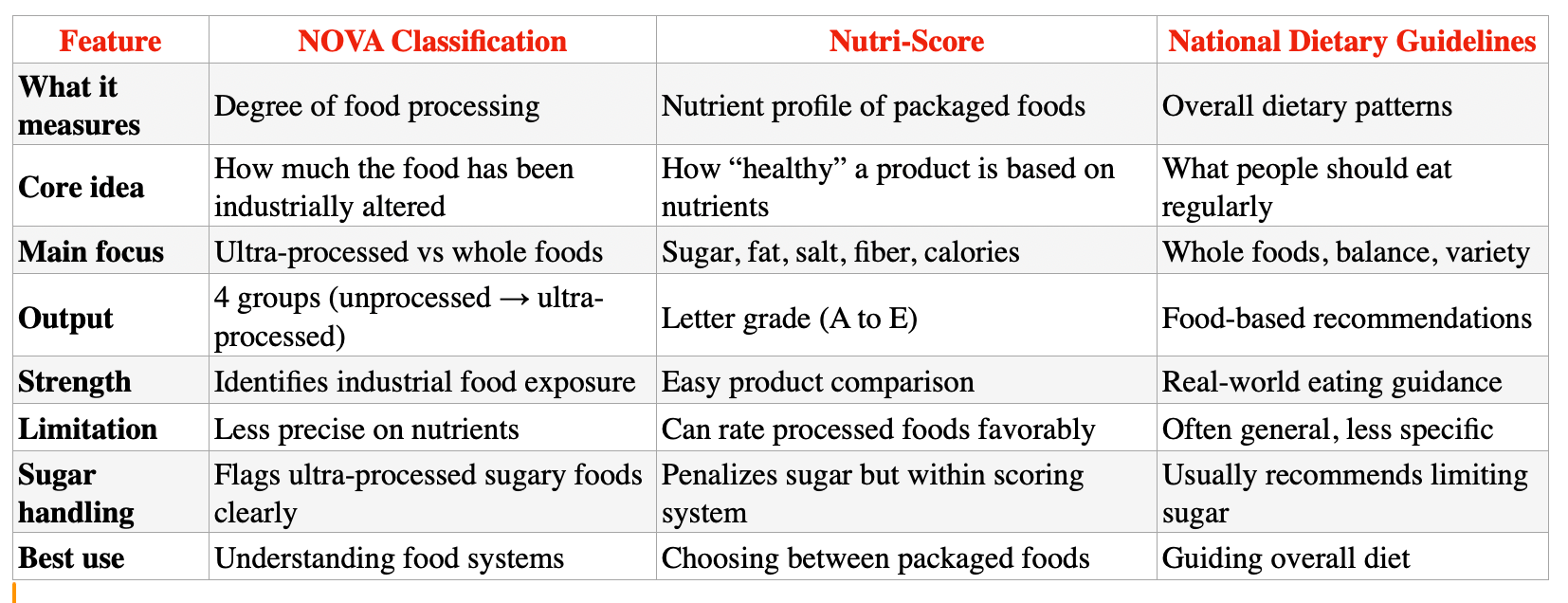
The four NOVA groups
- Unprocessed or minimally processed foods: fruit, vegetables, beans, grains, eggs, milk, meat and fish that remain recognizably close to their original form.
- Processed culinary ingredients: oils, sugar, salt and other substances used in kitchens to prepare meals.
- Processed foods: recognizable foods preserved or modified with relatively simple additions, such as some cheeses, canned vegetables and traditional breads.
- Ultra-processed foods: industrial formulations commonly made with refined fractions, added sugars or fats, flavors, colors, emulsifiers and other ingredients rarely used in domestic kitchens.
The classification is based on the nature, extent and purpose of processing, not simply the number of factory steps. It should be applied carefully; some borderline products require examination of formulation and intended use.
Brazil’s pioneering dietary guidelines
The second edition of the Dietary Guidelines for the Brazilian Population, published by the Ministry of Health in 2014, was a landmark. Instead of organizing advice mainly around nutrients, portions or isolated food groups, it placed food processing, meals, cooking, culture and the social setting of eating at the center.
Its “golden rule” is to prefer natural or minimally processed foods and freshly prepared dishes to ultra-processed products. The guidance also values eating regularly, eating attentively, sharing meals, developing cooking skills and being wary of food advertising.
It is safest to describe Brazil as the first national dietary-guideline system to place the extent and purpose of food processing at the center of its recommendations, rather than claiming that no earlier government had ever considered processing. What made the Brazilian guide historically important was the comprehensive, coherent use of this framework in official population guidance.
Why processing adds information beyond nutrients
Two products can display similar totals for sugar, fat, protein or sodium yet behave differently in real life. Ultra-processed products may be rapidly eaten, heavily marketed, packaged for snacking and formulated to encourage consumption. Processing can disrupt the food matrix, reduce texture and fiber structure and make calories easier to consume quickly.
NOVA is therefore not a substitute for nutrient analysis, food safety or clinical judgment. It adds another dimension: what the product is, how it was designed and whether it is displacing meals made from recognizable foods.
Quilombola food systems: African-descended communities in Brazil
Quilombola communities descend from settlements formed by Africans and their descendants who resisted slavery and created enduring territories. They are found across Brazil, including the Amazon. Their food systems vary by region and may include cassava, beans, maize, rice, fruit, fishing, small livestock, forest products, community gardens and agroforestry.
Quilombola food knowledge should not be treated as folklore detached from land. Territory, water, seed access, legal recognition, transport and public procurement determine whether local foods remain viable. Research in the Brazilian Amazon also shows why national dietary guidance must be interpreted with communities: a food can carry cultural, economic and spiritual meaning that a generic nutrient table cannot capture.
Research: Amazonian Quilombola foods and Brazil’s dietary guidelines
Brazilian food strengths worth protecting
Rice and beans remain one of the clearest examples of an affordable, complementary staple pattern. Beans provide fiber and plant protein; rice supplies energy; vegetables, fruit, eggs, fish or other foods can complete the meal. Cassava and maize connect contemporary diets with Indigenous agricultural knowledge, while açaí, cupuaçu and many other fruits show Brazil’s extraordinary biodiversity.
Regional traditions differ sharply across the Amazon, Northeast, Cerrado, Southeast and South. Food policy should avoid turning one urban middle-class plate into the national norm. Family farmers, Indigenous territories, quilombola communities, fisheries, markets and school-meal procurement all contribute to a resilient food system.
The double burden and commercial food environment
Brazil has made major progress against hunger and child undernutrition at different periods, yet food insecurity can return with economic disruption while obesity and diabetes continue. These conditions can coexist because cheap calories are not the same as reliable access to nourishing food.
Ultra-processed drinks, snacks, sweets, instant products and ready-to-eat meals are widely available and marketed. The response must go beyond personal discipline: water, school food, labeling, advertising rules, taxation, public procurement, work schedules and neighborhood retail all shape what families can choose.
Priorities Brazil can continue to lead
- Protect and regularly update the processing-based national dietary guidelines.
- Expand clear front-of-package information and restrictions on marketing to children.
- Support school meals based on minimally processed foods and local procurement.
- Make safe water freely available in schools and public places.
- Preserve rice and beans, cassava, maize, fruit, vegetables and regional cooking traditions.
- Continue independent research into both the health effects and mechanisms of ultra-processed-food consumption.
- Protect nutrition policy from conflicts of interest while engaging transparently with legitimate criticism and new evidence.
Selected authoritative sources and further reading
- Brazilian Ministry of Health: Dietary Guidelines for the Brazilian Population, second edition (2014)
- Brazilian Ministry of Health: food processing and the four categories
- Brazilian Ministry of Health: official dietary-guidelines portal
- Internets: NOVA food classification
- Internets: ultra-processed foods, NOVA and childhood obesity
- Food and Agriculture Organization: Brazil
- Pan American Health Organization: Brazil country profile
South America navigation
South America • Argentina • Bolivia • Brazil • Chile • Colombia • Ecuador • French Guiana • Guyana • Paraguay • Peru • Suriname • Uruguay • Venezuela