Table of contents
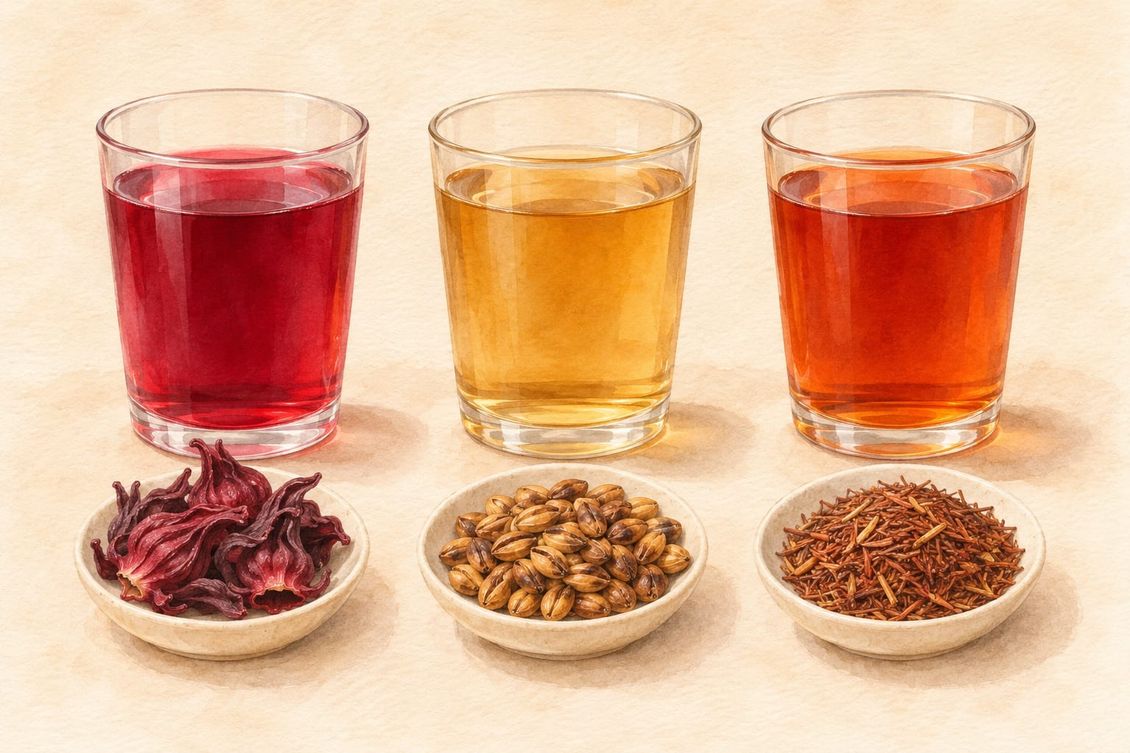
What can I drink instead of soda if I do not want plain water? Our ancestral beverage collection offers eleven illustrated guides to drinks with flavour, cultural roots and practical preparations without added sugar. Start with tart karkadé, toasted mugicha, mellow rooibos or fragrant salabat, then explore the wider collection.
That everyday question deserves an answer with history and something practical to try. A drink can welcome a guest, accompany a meal or keep a family practice alive. We want to give those choices a place at the table.
Eleven drinks and the traditions behind them
The collection brings together Egyptian and Sudanese karkadé, Japanese mugicha, South African rooibos, Filipino salabat, Moroccan mint tea, Anxi oolong, Arabic qahwa, Philippine buko, yaupon, sumac infusion and cacao with Maya roots.
Each guide explains the ingredients, cultural context and preparation, with sources and individual precautions. Named Indigenous foodway sources receive credit, and archaeological evidence is distinguished from a modern household recipe. Where we omit sugar from a commonly sweetened preparation, we call it an unsweetened adaptation.
Explore all eleven illustrated ancestral beverage guides →
Choosing a drink without added sugar
For readers looking for low-sugar alternatives to soft drinks, the useful starting point is the actual ingredient list and serving size. “No added sugar” describes what was put into the preparation. It does not automatically mean sugar-free, low in carbohydrate or suitable for everyone.
- Coconut water contains natural sugar. Plain buko belongs in the collection with that distinction clearly stated. Read the coconut water guide.
- Barley contains gluten. Mugicha is a roasted-grain drink, with an important restriction for people who avoid gluten. Read the mugicha guide.
- Several drinks contain caffeine. Leaf teas, yaupon, coffee and cacao require a different choice from caffeine-free rooibos. Read the rooibos guide.
- Sourcing and preparation matter. Yaupon and sumac need correctly identified food-grade ingredients; the sumac cold method has specific product requirements. Read the sumac guide.
The guides are household serving suggestions, not laboratory analyses of the finished drinks. Check packaged versions separately and read each drink’s precautions before making it part of your routine.
Keeping ingredients in perspective
Water, traditional infusions and modern soft drinks all contain chemical substances. The word “chemical” alone does not establish whether an ingredient is harmful: identity, amount and individual circumstances matter. Compare the actual drink rather than assuming that every soda is the same or that a traditional recipe suits everyone. FDA guidance on chemicals in food.