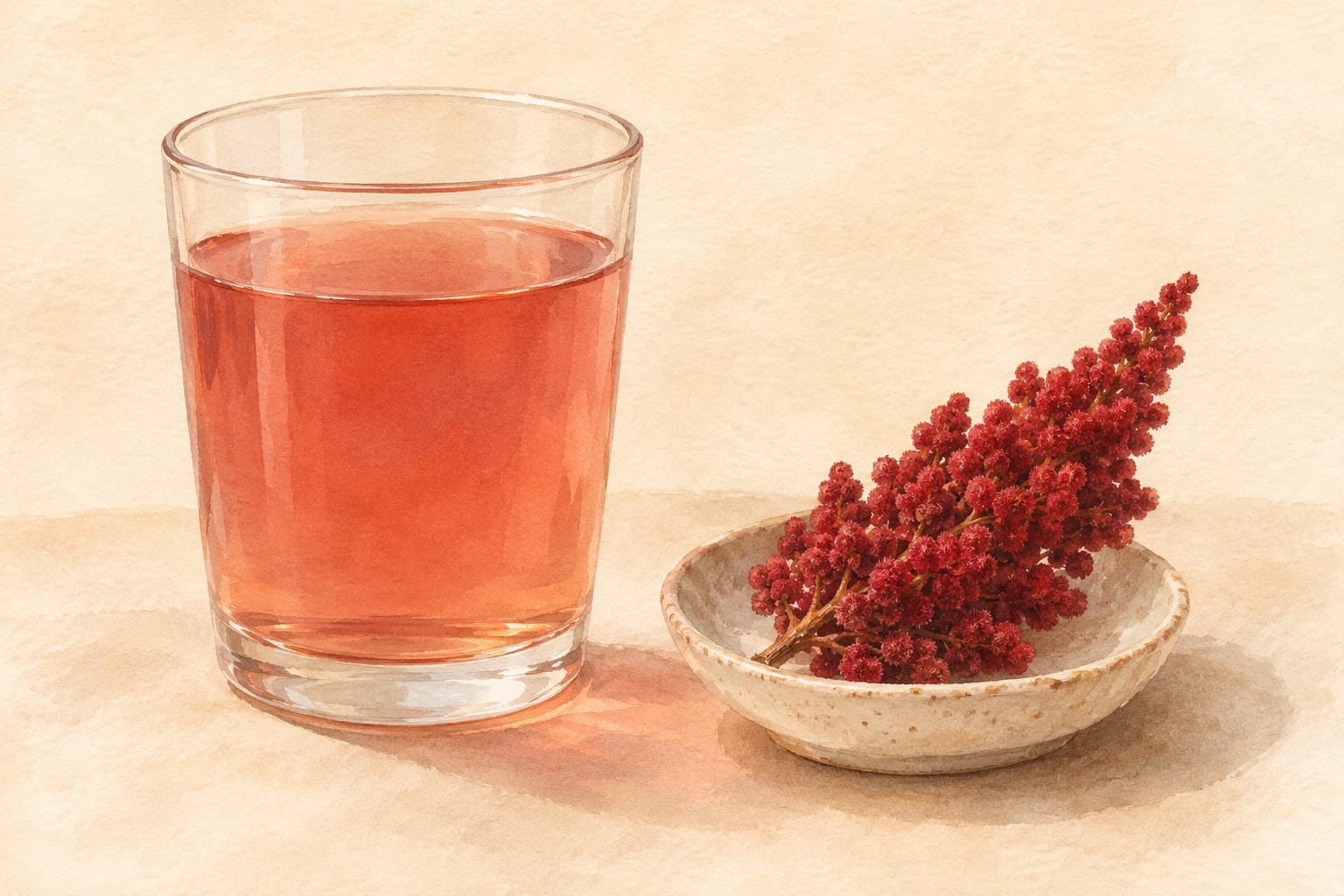
Heritage in a glass · North America · named Indigenous foodway sources
A tart berry infusion can make a memorable glass without adding sweetener. Sumac drinks also open a door to specific Indigenous cooks and organisations who share their own food knowledge.
- Flavour
- Tart · fruity · refreshing
- Caffeine
- No caffeine ingredients in this plain berry-and-water version
- Sugar
- No sugar or sweetener added; total sugars not measured
- Recipe and heritage
- An unsweetened household adaptation with specific food-safety conditions.
Credit the people sharing the foodway
In a PBS Native America segment, Chef Nico Albert, a citizen of the Cherokee Nation, demonstrates sumac lemonade. The Indigenous Diabetes Health Circle also shares a sumac lemonade recipe, with honey optional. These are named sources for a continuing foodway, rather than evidence that every Indigenous nation makes the same drink. PBS Native America: sumac lemonade with Chef Nico Albert; Indigenous Diabetes Health Circle: sumac lemonade.
Our version omits the optional sweetener and changes the handling instructions for a cautious household preparation. It is an editorial adaptation, not their endorsed recipe or a claim to reproduce a ceremony.
Edible sumac needs a verified identity
The University of Kansas American Indian Health and Diet Project describes smooth sumac, Rhus glabra, and its use in a tart drink. The small fruits are drupes, clustered together. University of Kansas American Indian Health and Diet Project: smooth sumac.
Ask a reputable food supplier for correctly identified edible sumac suitable for beverages, such as smooth sumac (Rhus glabra) or staghorn sumac (Rhus typhina). Poison sumac (Toxicodendron vernix) is a different, harmful plant. Do not forage using this article, a colour rule or the artwork. Ground culinary sumac products can also contain salt or other ingredients; they do not automatically match this preparation.
Make a small, carefully sourced infusion
Makes: about 500 mL, two small glasses. Use only a product explicitly suitable for cold infusion without heating.
- Food-grade edible sumac berries prepared and labelled for ready-to-use cold infusion; use the supplier’s quantity for 500 mL
- 500 mL cold drinking-quality water
- A clean covered jug and a paper coffee filter or equivalent fine food filter
- No honey, sugar, juice or syrup
- Check the species, food-use labelling and cold-preparation directions before starting. If a heat treatment is required, follow the supplier’s hot method instead; do not use the cold steps below.
- Combine the specified berries and cold water in a clean covered container. Infuse in the refrigerator according to the product directions; 30–40 minutes is a starting point only if consistent with those directions.
- Strain through a paper coffee filter into a clean jug to remove fine hairs and particles.
- Serve freshly made and keep chilled. Discard if handling or storage is uncertain.
The Indigenous Diabetes Health Circle describes a short soak and coffee-filter straining. We adapt it here by specifying refrigerated preparation and a product intended for consumption without heating. Ordinary dried herbs are not necessarily ready-to-eat products. Indigenous Diabetes Health Circle: sumac lemonade.
A traditional food is not a treatment
A tangy flavour does not establish a medical effect. This article does not claim that sumac treats diabetes, infection or other illness. Avoid it if you have a known allergy, and seek individual advice when your circumstances require it. If you cannot obtain a properly identified, appropriately processed food product, choose another beverage from the collection.
Serving and storage
Use clean utensils and drinking-quality water. Follow product preparation and storage instructions. Enjoy freshly made, refrigerate opened products and chilled batches promptly at 4°C / 40°F or below, and do not treat these household recipes as having a tested shelf life. General FDA guidance uses a two-hour limit out of refrigeration, shortened to one hour above 32°C / 90°F. FDA: safe food handling.
What “no added sugar” means
No sugar, honey, syrup, juice or sweetener is added to this preparation. This describes the ingredients; it is not a laboratory measurement of total sugar, carbohydrate or calories. Coconut water in particular has natural sugar. Check packaged versions and serving sizes separately.
Keeping ingredients in perspective
Water, traditional infusions, cacao and modern soft drinks all contain chemical substances. “Chemical” alone does not tell us whether something is harmful: identity, amount and individual circumstances matter. Modern sodas differ in formulation, just as traditional recipes do. Compare actual ingredients and servings rather than assuming that every soda is the same or every old recipe is safe for everyone. FDA: is food safe if it has chemicals?.
Sources and further reading
Questions about this drink
What tart drink can I make without adding sugar?
A sumac berry infusion can offer a tart flavour without added sweetener, provided the ingredient and preparation meet this guide's conditions. We have not measured total sugars. This adaptation credits named Indigenous foodway sources rather than claiming one universal traditional recipe.
Can I cold-brew any sumac berries?
No. Use correctly identified edible sumac sold for beverage use. The cold method requires a product explicitly suitable for consumption without heating; otherwise follow its required hot preparation or choose another drink. Do not forage using this article or illustration, and do not use poison sumac.
Medical disclaimer
Educational resources only. Internets.com cannot provide personal medical advice, diagnosis, treatment recommendations, lab interpretation, or case review.
This information does not replace individual medical or dietary care. Consult a qualified health professional who knows your circumstances about medicines, allergies, pregnancy, breastfeeding, children, or existing illness. Do not stop or change prescribed treatment because of a beverage recipe.
Prepared 15 November 2026 · Internets Press. Household serving suggestions; no clinical reviewer is attributed.