Subsection Navigation
Micronesia • Guam • Northern Mariana Islands
Guam: an Indigenous island food system inside a U.S. territory
Guam is an organized, unincorporated territory of the United States and the largest island in Micronesia. Its metabolic-health story joins Indigenous CHamoru food knowledge, centuries of colonial change, military and tourism economies, migration from across Asia and the Pacific, and a modern U.S.-linked retail and health system. It should be compared with the Northern Mariana Islands, but not treated as identical to them.
Key takeawaysGuam’s public-health agency identifies diabetes, obesity, heart disease, stroke and cancer among the territory’s major noncommunicable-disease challenges.Territorial plans cite a high diagnosed-diabetes burden, but estimates based on self-reported BRFSS surveys must not be confused with measured blood-glucose surveys.CHamoru staples such as taro, breadfruit, yam, banana, seafood, vegetables and fruit remain important cultural and nutritional assets.Guam is advancing an NCD Prevention and Control Strategic Plan for 2025–2030 and community diabetes self-management work.
Diabetes and obesity: use the numbers carefully
The World Health Organization describes Guam as facing high rates of diabetes, obesity, heart disease, stroke and cancer. Guam participates in the U.S. Behavioral Risk Factor Surveillance System, which relies on telephone interviews and self-reported diagnoses, height and weight. These data are useful for tracking trends, but they are methodologically different from Pacific STEPS surveys that directly measure height, weight and blood biomarkers.
Guam’s fiscal-year 2024 diabetes work plan cited a 2022 estimate that 21.6% of adults had diagnosed diabetes and described roughly two thirds of the population as overweight or obese. Those figures are best understood as planning estimates from territorial sources rather than proof that every resident group has the same risk. Age, ethnicity, income, insurance, migration history and access to preventive care all shape the burden.
From CHamoru staples to imported convenience
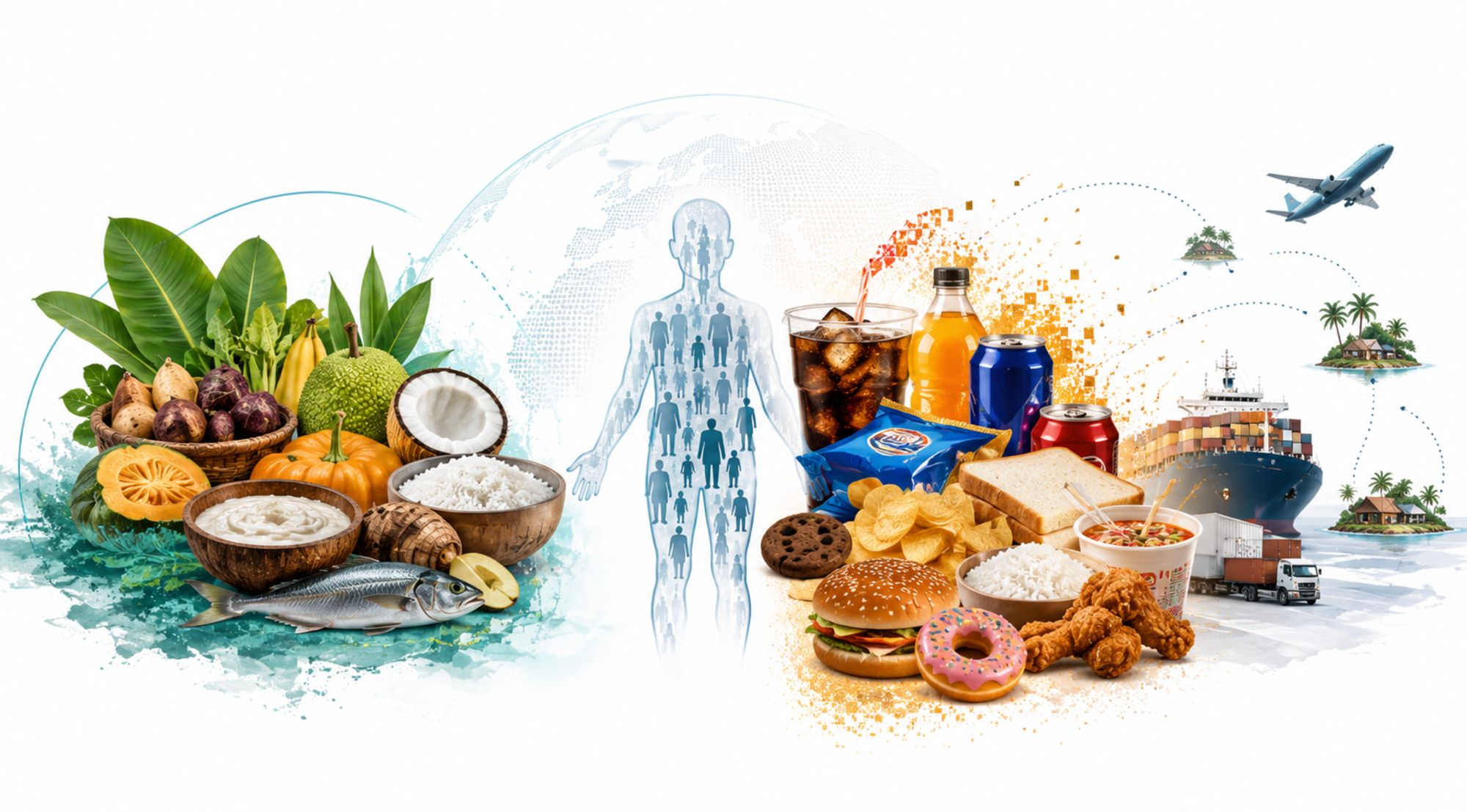
Traditional and locally adapted foods include taro, breadfruit, yam, banana, coconut, fish, shellfish, fruit and leafy vegetables. These foods can provide fiber, micronutrients and satiety within mixed meals while supporting farming, fishing and cultural continuity. Their nutritional effects depend on preparation, portion patterns and the wider food environment, including exposure to sugar-sweetened beverages, refined snacks and highly processed convenience foods.
Guam’s food environment is deeply connected to U.S. supply chains and programs. Imported foods can improve variety and food security, but freight costs, supermarket pricing, fast food, convenience stores and heavy marketing also shape what is easiest to buy. Military land use, typhoons and climate stress affect agricultural capacity and recovery. Long-term support for local growers depends on dependable markets, storage, storm resilience and public procurement.
CHamoru identity, migration and health equity
Guam’s population includes CHamoru people, Filipinos, other Micronesian and Pacific communities, Asian communities, military-connected residents and others. These categories are not biological risk scores. Differences in diabetes or obesity can reflect age structure, early-life nutrition, occupation, housing, income, food prices, insurance coverage, stress and access to culturally appropriate care as well as inherited variation.
Good surveillance should publish methods and denominators and avoid collapsing distinct communities into a single “Pacific Islander” category. Prevention works better when communities help design it, local languages and food practices are respected, and screening is connected to affordable long-term care.
Guam’s emerging public-health response
The Guam Department of Public Health and Social Services operates diabetes prevention, nutrition, screening, education and self-management activities. Its Bureau of Non-Communicable Disease reports progress toward a Guam NCD Prevention and Control Strategic Plan 2025–2030, alongside a comprehensive cancer-control plan. These plans create an opportunity to align clinical care with school food, food assistance, agriculture, retail policy and community organizations.
Useful outcome measures include diagnosed and controlled diabetes, blood pressure, kidney function, beverage purchases, fruit and vegetable access, program reach and disparities between communities. Counting workshops alone cannot show whether metabolic health has improved.
Comparison with the Northern Mariana Islands
Guam and the Commonwealth of the Northern Mariana Islands share CHamoru heritage, typhoon exposure, U.S. political and food-system connections and substantial imported-food dependence. They also have different governments, health infrastructures, migration patterns, economies and island geographies. Guam should therefore serve as a comparison point for CNMI—not as a substitute data source. Saipan’s growing interest in taro and ube breads may be a useful entry into local agriculture and patient engagement, while the final health value still depends on flour refinement, added sugar, portion size and the rest of the meal.
New federal nutrition rules in a divided policy landscape
The Dietary Guidelines for Americans, 2025–2030, released by USDA and HHS in January 2026, emphasize minimally processed “real food” and limiting added sugars, refined carbohydrates and highly processed foods. Separately, USDA school-meal regulations introduced product-specific added-sugar limits for cereals, yogurt and flavored milk in school year 2025–26, with a weekly limit below 10% of calories scheduled for school year 2027–28.
The school-meal rule was finalized under the Biden administration, while implementation now continues under a Trump administration that uses different nutrition-policy language and priorities. In Guam, the important question is not which political slogan prevails but whether schools receive stable funding, suitable products, transparent nutrition information and enough flexibility to purchase culturally appropriate local foods. Added-sugar standards should be evaluated by what children are actually served—not merely by federal announcements.
A practical pathway
- Make water routine: reduce daily sugar-sweetened-beverage exposure in schools, workplaces, clinics and public events.
- Strengthen island production: support taro, breadfruit, banana, vegetables, fruit and fisheries with storm-resilient infrastructure and purchasing commitments.
- Connect screening to continuing care: address glucose, blood pressure, kidney disease, lipids and fatty liver rather than focusing only on body weight.
- Evaluate the 2025–2030 plan: report health outcomes and equity, not only activities.
Selected authoritative sources
Subsection Navigation
Micronesia • Guam • CNMI • Federated States of Micronesia • Palau • Marshall Islands • Nauru • Kiribati
Global Atlas Navigation
Global Metabolic Crisis • Oceania and Pacific Islands • Micronesia