Northern Mariana Islands: food transition across Saipan, Tinian and Rota
The Commonwealth of the Northern Mariana Islands (CNMI) is a self-governing U.S. commonwealth in Micronesia. Saipan, Tinian and Rota share Chamorro heritage and U.S.-linked food systems with Guam, but the CNMI has its own government, and health infrastructure. Its current health evidence shows an urgent need to connect diabetes care with food security, schools, agriculture and cultural knowledge.
Key takeawaysThe CNMI’s 2023 hybrid health survey estimated that 26.8% of adults had diabetes, using self-reported treated diabetes and/or an HbA1c result of at least 6.5%.Among adults identified as having diabetes, 46.4% were not diagnosed and taking medication; among diagnosed adults on medication, only 30.5% had HbA1c below 7%.87.9% consumed fewer than five daily servings of fruits and vegetables, while 68.9% ate processed meat at least once per day.Traditional foods, school-meal purchasing and renewed interest in taro, ube and breadfruit products can support recovery—but ingredients, added sugar and processing still determine metabolic value.
A measured warning from the 2023 CNMI survey
The Commonwealth Healthcare Corporation’s 2023 Non-Communicable Diseases and Associated Risk Factors Hybrid Survey combined questionnaires with physical and biochemical measurements. It estimated diabetes in 26.8% of adults and prediabetes in 29.4%. Diabetes increased strongly with age, from 5.8% among adults aged 18–24 to 41.6% among those aged 65 and older. Estimates by island were 27.2% for Saipan, 19.0% for Tinian and 26.4% for Rota, but smaller-island estimates should be read with their sampling uncertainty.
The same survey found that nearly half of adults classified as having hypertension were not diagnosed and taking medication. This is why metabolic prevention must extend beyond weight. Blood glucose, HbA1c, blood pressure, kidney function, lipids, liver health and access to continuing treatment all matter.
Chamorro and Carolinian food knowledge
Traditional island foods include taro, yam, breadfruit, banana, coconut, fish, shellfish, fruit and leafy plants. Titiyas are less common in the CNMI today than it is in Guam, an important local distinction. It remains part of wider Chamorro food history, with forms including titiyas mai’es made with corn, titiyas månha incorporating young coconut and titiyas lemmai incorporating breadfruit. These foods carry history and social meaning as well as nutrients.
The nutritional profile of any food reflects its ingredients, preparation and meal context. An intact root crop eaten with vegetables and protein differs from a refined white bread containing a smaller amount of taro or ube. Whole-root content, flour refinement, fiber, added sugar, fat and serving size all influence the metabolic response.
Super Typhoon Sinlaku, imports and post-storm nutrition
Super Typhoon Sinlaku in April 2026 was among the most punishing storms experienced by the CNMI in decades. The National Weather Service reports that Sinlaku’s eye crossed Tinian and Saipan overnight on April 14–15 and that the eyewall remained over both islands for an extended period; an Extreme Wind Warning remained in effect for more than 22 hours. The wider storm and dangerous sea conditions affected the islands for days. Residents who endured both storms have described Sinlaku’s prolonged battering and flooding as more destructive in daily life than Yutu’s faster passage, even though Yutu struck with extraordinary peak winds.
After a severe typhoon, “choose fresh local food” can become impossible advice. Electricity, refrigeration, water, roads, farms, fishing and stores may all be disrupted at once. Foods that survive safely at room temperature are often imported canned meat, instant noodles, polished rice, packaged snacks and sweetened drinks. Emergency reliance on these foods is a survival response shaped by availability. Preparedness should include shelf-stable healthier options, safe water, backup power and cold storage, protected planting material, rapid support for growers and fishers, and nutrition-aware disaster procurement.
Saipan concentrates most services, while Rota and Tinian face smaller markets and transport constraints. Storm-resistant growing systems and dependable inter-island shipping are metabolic-health infrastructure. The 2023 survey finding that more than two thirds of adults consumed processed meat daily shows how an imported emergency diet can also become an everyday diet unless healthier foods are affordable and dependable.
School meals can reshape the default diet
The CNMI Public School System’s Child Nutrition Program serves schools, Head Start centers, childcare centers and summer programs across Saipan, Tinian and Rota under a USDA-funded Nutrition Assistance Grant. Meals are produced by contracted food-service companies—five on Saipan and one each on Rota and Tinian. This scale makes procurement a powerful intervention.
Current menus include fruit and vegetables and sometimes local vegetables, but they also show frequent refined grains, processed meats, flavored milk and sweet breakfast items. The next step is measurable improvement: water-first beverage access, less processed meat, clear added-sugar standards, more beans and local vegetables, and purchasing targets for island-grown taro, sweet potato, breadfruit, fruit and fish where supply and safety allow.
Health equity and continuing care
The 2023 survey reported important gaps in insurance, dental care and treatment. The CNMI’s 2025–2030 Community Health Improvement Plan identifies Rota and Tinian residents and several cultural communities as populations needing improved reach. Ethnicity should guide respectful engagement and disaggregated evaluation, not be treated as a biological verdict. Income, migration status, transportation, language, food prices and access to care can produce or amplify observed differences.
USDA guidance and a divided political landscape
The Dietary Guidelines for Americans, 2025–2030, released in January 2026, emphasize “real food” and limiting added sugars, refined carbohydrates and highly processed foods. Separately, USDA school-meal regulations began product-specific added-sugar limits for cereals, yogurt and flavored milk in school year 2025–26. A weekly limit below 10% of calories is scheduled for school year 2027–28.
The school rule was finalized under the Biden administration, while implementation now occurs under a Trump administration using different nutrition-policy language and priorities. For the CNMI’s USDA-supported Child Nutrition Program, political continuity matters: caterers and schools need stable specifications, suitable products, technical support and realistic procurement timelines across three islands. The goal should be judged by menus and children’s intake—less added sugar and refined food, more water and culturally appropriate local foods—not by partisan branding.
Northern Mariana Islands is named in a world map showing childhood obesity in 2021
A major 2025 Lancet Global Burden of Disease study estimated overweight and obesity for people aged 5–24 in 204 countries and territories from 1990–2021 and forecast trends to 2050. Because many Pacific islands are too small to be clearly visible on a world map, the figures print their names beside the maps—including the Northern Mariana Islands, Palau, Guam, Nauru, Kiribati and other Oceanic jurisdictions. The labels make a crucial health signal visible rather than allowing tiny land area to erase it.
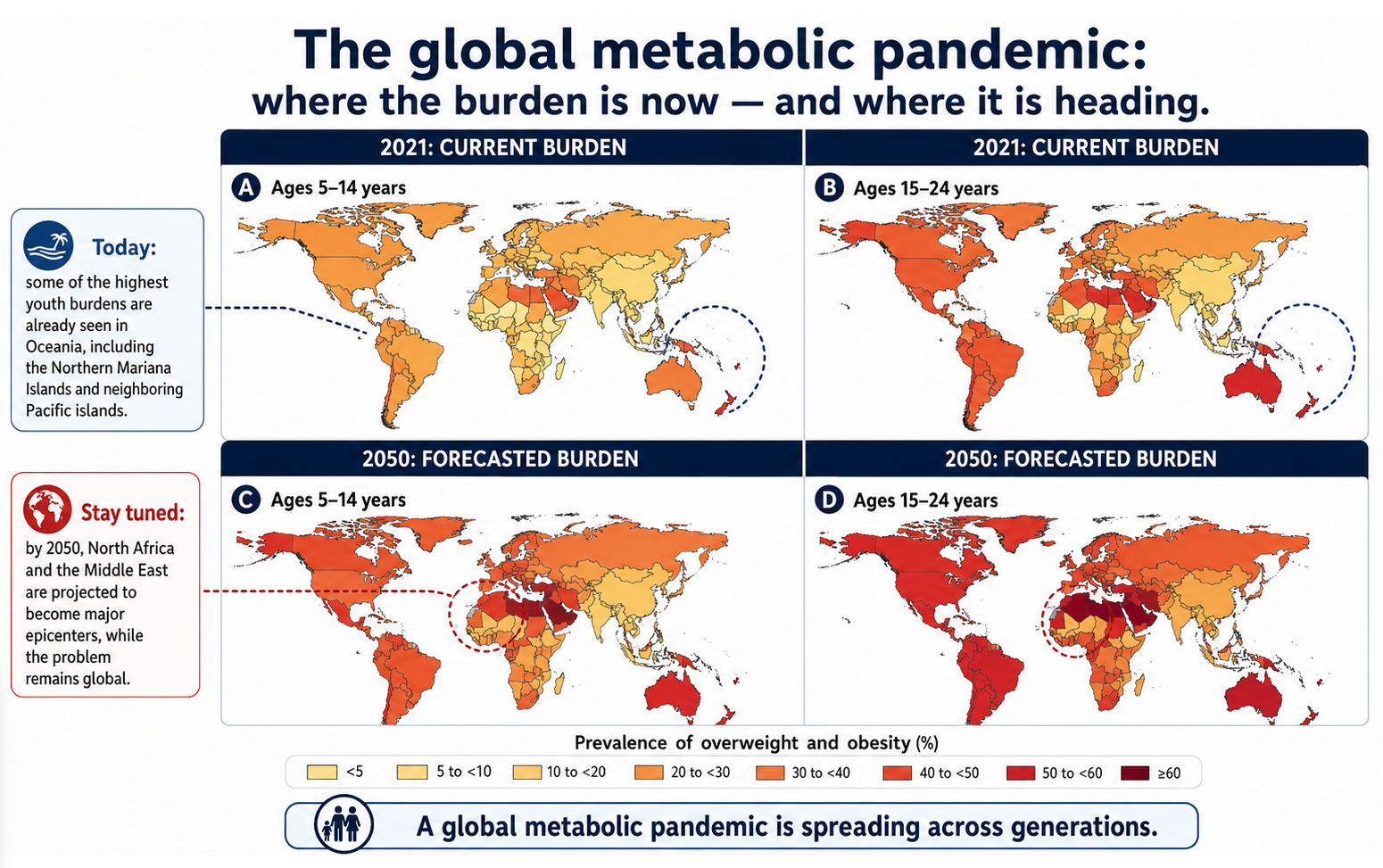
The same study forecasts a rapid transition toward obesity across North Africa and the Middle East and parts of Latin America and the Caribbean. It names Mexico, Venezuela and Costa Rica as examples of central Latin American countries where obesity is projected to become more prevalent than overweight among young boys by about 2030–2040; by 2050, some of the highest country estimates are expected in the United Arab Emirates, Kuwait, Saudi Arabia and Bahrain. This suggests that the pattern now starkly visible in small Pacific islands is likely to spread across far larger populations by 2050.
Forecasts are conditional, not destiny. They extend observed trends and contain uncertainty. Their purpose is to show what could happen without effective changes in food systems, schools, commercial marketing, agriculture, transport and clinical prevention.
Fructose, uric acid, gout and kidney health
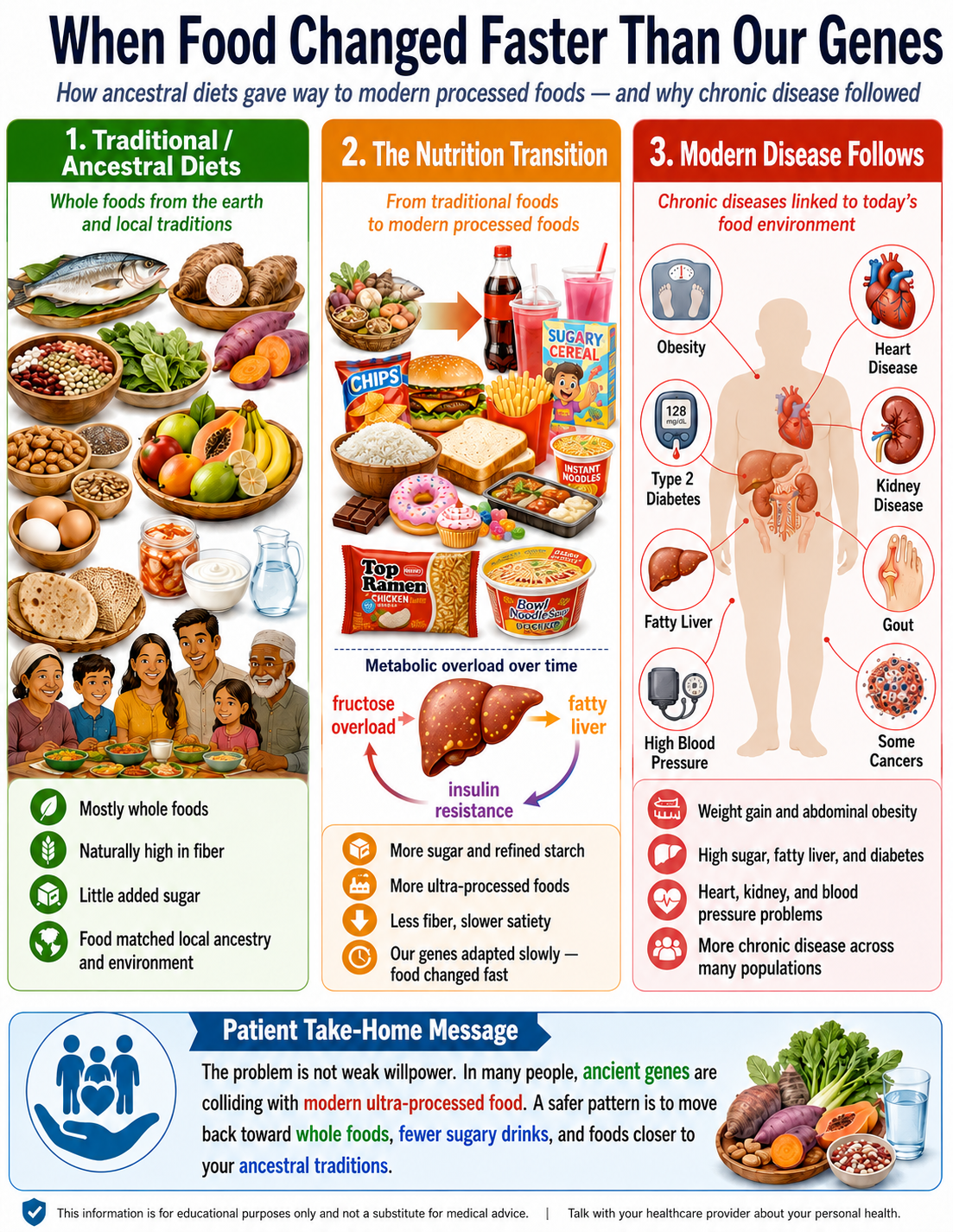
Clinical education in the CNMI explains how added sugar and sugary beverages affect liver metabolism. Work led by Robert Lustig and colleagues at UCSF describes important metabolic parallels between fructose and alcohol: both are handled largely by the liver, and excess exposure can promote liver fat and metabolic dysfunction. During rapid fructose metabolism, ATP is consumed and AMP is degraded through the purine pathway, increasing the production of uric acid.
Inherited differences in urate transport can make some people more likely to retain uric acid. The SLC2A9 gene encodes the GLUT9 urate transporter; variants in SLC2A9 and other urate-transport genes can influence serum urate levels and susceptibility to gout. Kidney function, dehydration, alcohol, sugary drinks, medicines and overall dietary pattern also influence whether uric acid accumulates.
Uric acid is about far more than gout. When monosodium urate crystallizes, it can cause painful gout and deposits around joints; uric-acid crystals can also contribute to kidney stones and, in severe settings, kidney injury. Elevated urate commonly accompanies reduced kidney function and is associated with vascular and metabolic stress. This makes serum urate, kidney function and urine albumin useful parts of individual clinical assessment.
CNMI clinical education also draws on the long-term study led by Vasanti Malik, which followed more than 118,000 U.S. adults. It found a dose-related association: people reporting more sugar-sweetened beverages had a higher risk of premature death, particularly from cardiovascular disease. The study was observational; its findings nevertheless support lower exposure to sugary drinks and greater availability of water and other unsweetened beverages.
Ancestral Chamorro and Carolinian food knowledge provides a constructive foundation for metabolic care. Island communities have long relied on taro, yam, breadfruit, banana, coconut, fish, shellfish, fruit and leafy plants. Renewed access to these foods, together with lower exposure to added sugar, sugary drinks and refined processed foods, connects contemporary care with established island knowledge.
Explore the uric-acid pathway
How fructose metabolism increases uric-acid production • Hyperuricemia and high uric acid • What causes high uric acid? • Why uric acid is more than a gout story
A practical CNMI pathway
- Turn root-crop enthusiasm into agriculture: connect bakeries, schools and hospitals with local growers.
- Measure root-crop bread composition: measure real root content, fiber, added sugar and portion size.
- Use school procurement: reduce processed meat and liquid sugar while increasing local plants and minimally processed foods.
- Design for typhoons: protect planting material, water, storage and inter-island distribution.
- Link diagnosis to diet: Here is a patient handout that is especially effective at linking modern food to diseases in the individual patient.
Saipan’s taro and ube bakery movement
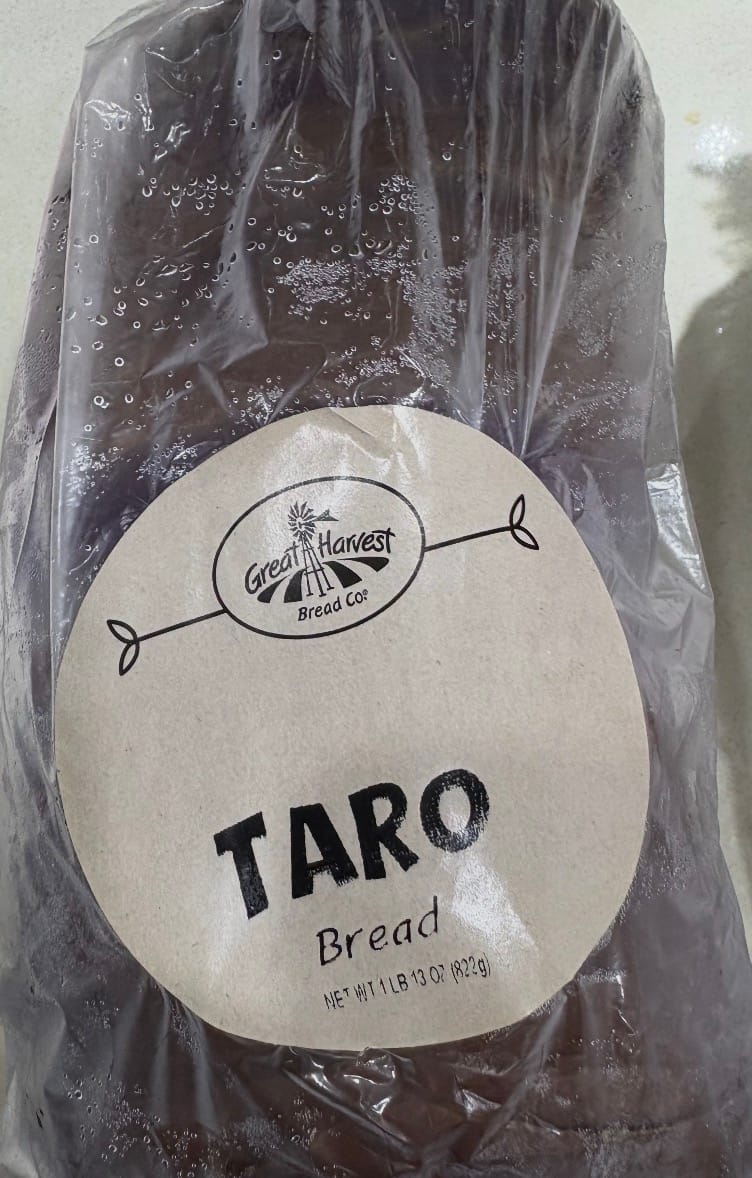
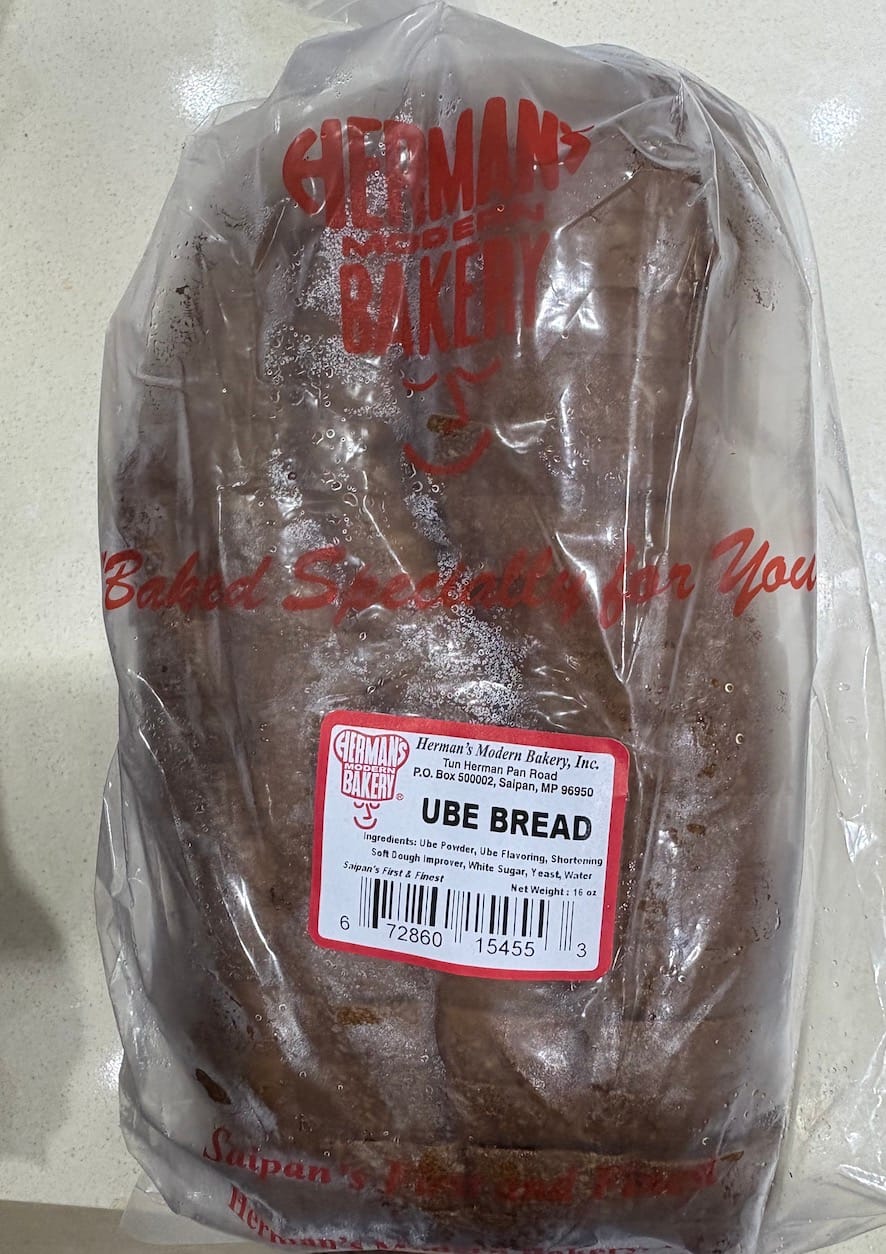
Saipan bakeries are turning island-root flavors into familiar commercial foods. Great Harvest’s official Saipan menu describes a Saipan-exclusive taro bread made as a soft white loaf with butter, taro and potato flakes. Herman’s Modern Bakery’s March 2026 price list confirms a 16-ounce ube bread, ube dinner rolls and an ube white-chocolate-chip cookie, alongside other ube pastries. These are real local-market developments, not proposed products.
A clinical observation shared with this project is that patient requests have helped build demand for taro and ube breads. That is an encouraging sign of consumers asking businesses for culturally meaningful alternatives, although it is not yet a formal sales or health-outcome study. The next opportunity is to increase real root content, reduce refined flour and added sugar where feasible, publish ingredients and nutrition information, and connect production to CNMI growers.
Is the CNMI moving ahead of Guam?
Clinical and community observations shared with this project suggest that Saipan, Tinian and Rota may be building stronger momentum than Guam toward reversing metabolic syndrome, including increased patient demand for root-crop foods and renewed attention to local production. This is a promising hypothesis, not yet a demonstrated population-level result. A fair comparison requires repeated measurements of weight, blood pressure, fasting glucose or HbA1c, and uric acid levels. The data is available on Saipan, but just needs funding and a University partner to demonstrate in a longitudinal study that return to ancestral foods leads to better health.
Selected authoritative sources
- Commonwealth Healthcare Corporation — 2023 CNMI NCD Hybrid Survey
- CNMI Community Health Improvement Plan 2025–2030
- CNMI Public School System — Child Nutrition Program
- Great Harvest Saipan — official bread menu
- Herman’s Modern Bakery — March 2026 product and price list
- National Weather Service Guam — Super Typhoon Sinlaku island impacts
- The Lancet — global child and adolescent overweight and obesity forecasts to 2050
- Guampedia — Titiyas flatbread and its traditional varieties
- Caliceti et al. — fructose intake, uric acid and cardiometabolic disorders
- Vitart et al. — SLC2A9 urate transport, serum urate and gout
- KDIGO 2024 Clinical Practice Guideline for Chronic Kidney Disease
- UCSF — Robert Lustig on fructose, liver metabolism and alcohol parallels
- Malik et al. — sugar-sweetened beverages and mortality in U.S. adults
Subsection Navigation
Micronesia • Guam • CNMI • Federated States of Micronesia • Palau • Marshall Islands • Nauru • Kiribati
Global Atlas Navigation
Global Metabolic Crisis • Oceania and Pacific Islands • Micronesia