Heritage in a glass · Egypt & Sudan
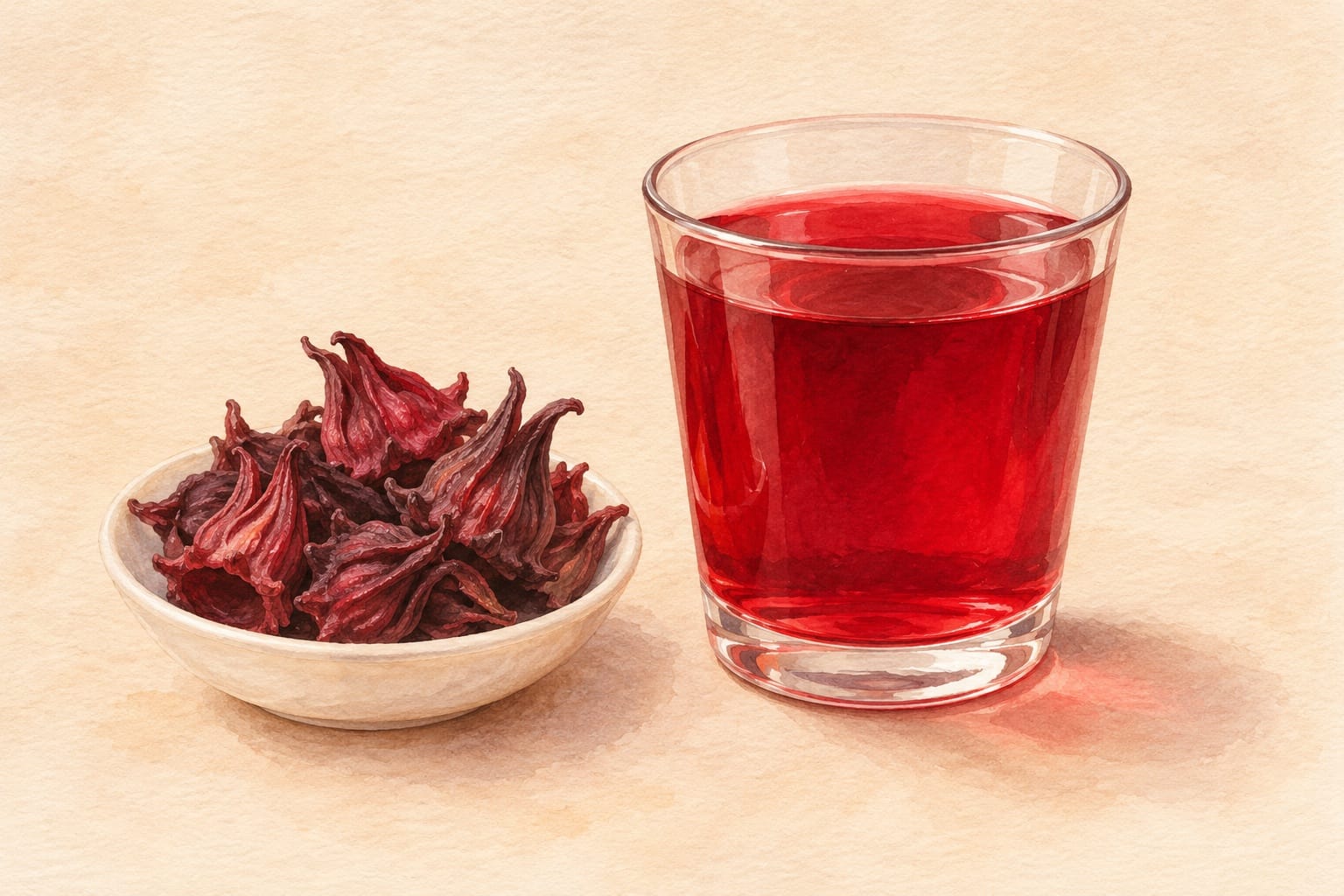
A glass of karkadé brings vivid colour and a pleasantly sharp flavour to the table. This hibiscus infusion belongs to living Egyptian and Sudanese food traditions, and can be enjoyed warm or chilled without adding sugar.
At a glance: Brew food-grade Hibiscus sabdariffa calyces in hot water, strain and serve plain. Our version adds no sugar, honey, syrup or juice. Hibiscus is not suitable for everyone: read the pregnancy and medicine precautions below.
- Main ingredient
- Dried Hibiscus sabdariffa calyces
- Added sugar
- 0 g in this plain recipe
- Caffeine
- No tea leaves or other caffeine ingredients added; check blends
- Important caution
- Pregnancy, breastfeeding, low blood pressure and medicine interactions
A heritage shared across borders
Karkadé is made from the fleshy calyces—the structures surrounding the developing seed capsule—of roselle, Hibiscus sabdariffa. It is often sold as “hibiscus flowers”, but the calyx is the principal ingredient. Plant Resources of Tropical Africa describes the sour drink’s popularity from Senegal to Sudan and in Egypt and other parts of northern Africa. Plant Resources of Tropical Africa: Hibiscus sabdariffa.
Egypt is an important part of this story, alongside Sudan and other communities with their own names and preparations. We celebrate that shared heritage without claiming a proven pharaonic recipe or a single exclusive origin. Modern family recipes vary; many are sweetened. The preparation below is an unsweetened adaptation.
What does karkadé taste like?
Expect a floral aroma, a ruby-red colour and a tartness that may remind you of cranberry. Start with a modest strength and dilute with drinking water if it tastes too sharp. Dilution changes intensity; it does not remove any sugar already added to a commercial drink.
Make an unsweetened pitcher
Makes: about 1 litre, or four 250 mL servings. Time: about 10 minutes, plus chilling if desired.
- 6 g dried food-grade Hibiscus sabdariffa calyces, or plain hibiscus tea bags providing approximately that amount
- 1 litre drinking-quality water
- No sugar, honey, syrup, fruit juice or sweetener
- Bring the water to a full boil. Place the hibiscus in a clean heat-safe pot.
- Pour the boiling water over it, cover, and steep for 5–10 minutes; follow any longer time required on the package.
- Strain. Allow a hot serving to cool to a comfortable drinking temperature. For iced tea, cool and refrigerate promptly before serving over clean ice.
This is a household beverage suggestion, not a medicinal dosing schedule. The infusion method is consistent with the Egyptian Drug Authority: Hibiscus sabdariffa monograph (2023); adjust flavour by dilution rather than by making a concentrated extract.
Who should take extra care?
The Egyptian Drug Authority advises against hibiscus use during pregnancy and breastfeeding because safety data are insufficient. It also warns of interactions with blood-pressure medicines, chloroquine, simvastatin and diabetes medicines. If you use these medicines, have low blood pressure, or have surgery planned, ask your clinician or pharmacist before making hibiscus a regular drink. Avoid it if you have a relevant plant allergy. Egyptian Drug Authority: Hibiscus sabdariffa monograph (2023).
An ordinary cup is not the same as a concentrated supplement. This page does not recommend hibiscus to treat hypertension, diabetes or another condition.
Keep the sugar claim honest
“No added sugar” describes the ingredients we put into this recipe; it is not a laboratory measurement of total sugars. We have not analysed the finished infusion. Packaged karkadé, sweetened concentrates and café drinks may have very different formulations. Check their labels or ask how they are prepared.
Prepare, cool and serve with care
Use drinking-quality water, clean utensils and ingredients sold for food use. Prepare these infusions hot before chilling; follow the product’s brewing instructions. For herbal infusions, use freshly boiling water and steep for at least five minutes, or longer if the pack requires it. German Federal Institute for Risk Assessment: boiling water for herbal teas.
For a chilled pitcher, cool promptly in smaller heat-safe containers and refrigerate rather than leaving it warm on the counter. As a conservative household rule, refrigerate within two hours, or within one hour above 32°C / 90°F, and keep the refrigerator at 4°C / 40°F or below. These limits adapt general food-handling guidance; they are not a tested shelf life for these recipes. Make small batches, enjoy freshly prepared, and follow any shorter storage directions on the pack. FDA: safe food handling.
Explore the collection
Egypt & Sudan
Karkadé
Bright red · floral · tart
Hibiscus calyces. Read medicine and pregnancy cautions.
Heritage, recipe and safetyJapan
Mugicha
Toasted grain · nutty · mellow
Roasted barley. Contains gluten.
Heritage, recipe and safetySouth Africa
Rooibos
Amber red · rounded · earthy
Plain rooibos. Naturally caffeine-free.
Heritage, recipe and safetySources
Keeping ingredients in perspective
All drinks—including water, traditional teas and modern soft drinks—contain chemical substances. The word “chemical” alone does not tell us whether something is harmful. What matters is the substance, the amount consumed and the person drinking it. Modern soft drinks vary in their ingredients and sugar content; compare the actual product rather than assuming every soda is the same. Traditional drinks can offer flavour, cultural connection and options without added sugar, but their long history does not guarantee that every preparation suits everyone. FDA: is food safe if it has chemicals?.
Questions about this drink
Can hibiscus tea be an alternative to soda without added sugar?
Yes. This plain karkadé preparation uses hibiscus calyces and water without sugar, honey or syrup. Its tart flavour offers a different choice from a sweet soft drink. That ingredient statement is not a measured total-sugar value or a promise that hibiscus suits everyone.
Does karkadé contain caffeine?
The plain hibiscus-and-water recipe has no caffeine ingredients. A commercial blend may include tea leaves or other ingredients, so check its label. Read the medicine, pregnancy and breastfeeding precautions in this guide before regular use.
Medical disclaimer
Educational resources only. Internets.com cannot provide personal medical advice, diagnosis, treatment recommendations, lab interpretation, or case review.
This information does not replace individual medical or dietary care. Consult a qualified health professional who knows your circumstances about medicines, allergies, pregnancy, breastfeeding, children, or existing illness. Do not stop or change prescribed treatment because of a beverage recipe.
Published 15 November 2026 · Internets Press. Recipes are editorial serving suggestions; no individual medical review is claimed.