India at a glance
India faces a complex double burden of malnutrition. Undernutrition and micronutrient deficiencies remain important, while type 2 diabetes, hypertension, abnormal blood lipids, cardiovascular disease and metabolic dysfunction-associated steatotic liver disease are major concerns. Risk varies substantially among states, communities and individuals and is shaped by age, family history, central fat distribution, diet, physical activity, sleep, tobacco exposure, income and access to preventive care.
South Asian populations can develop metabolic abnormalities at lower body mass index values than conventional obesity thresholds might suggest. Body mass index alone can therefore miss risk; waist measurement, blood pressure and appropriate glucose and lipid testing provide additional information.
Food traditions and dietary quality
India’s food cultures are exceptionally diverse. Pulses, beans, vegetables, leafy greens, fruit, fermented foods, dairy, eggs, fish, nuts, seeds, spices and minimally refined grains can all contribute to healthy dietary patterns. No single staple or traditional ingredient determines metabolic health. The overall pattern matters, including portions, grain refinement, cooking method, added sugar, sodium and the frequency of sweetened drinks, confectionery and fried or packaged foods.
The aim is not to replace regional cuisines with one national menu. It is to protect culturally familiar, minimally processed meals while improving access to vegetables, pulses and other nutrient-dense foods.
National dietary guidance
The Indian Council of Medical Research–National Institute of Nutrition issued revised Dietary Guidelines for Indians in 2024. The guidelines address dietary diversity, vegetables and fruit, pulses, cereals and millets, food safety, physical activity, label reading and the need to limit ultra-processed foods. They provide an authoritative framework, but implementation must be adapted to regional food systems, languages, life stages and household budgets.
Practical implementation can include healthier school meals, nutrition-sensitive public procurement, clear front-of-pack information, access to safe drinking water and primary-care counselling that respects vegetarian and non-vegetarian traditions.
Childhood nutrition transition: what the 2025 UNICEF report shows
UNICEF’s 2025 Child Nutrition Report documents a global turning point among children and adolescents aged 5–19: obesity prevalence reached 9.4%, slightly exceeding underweight at 9.2%. This is a global finding, not a claim that obesity has already overtaken every form of undernutrition within India. India continues to carry substantial burdens of stunting, wasting, anaemia and poor dietary diversity alongside rapidly increasing overweight and obesity.
UNICEF India reports that overweight and obesity are rising across age groups and that the prevalence of overweight among children under five more than doubled in just over a decade. It also cites a projection that India could have more than 27 million children and adolescents aged 5–19 living with obesity by 2030, representing about 11% of the projected global burden. These figures describe a double burden, not a completed replacement of undernutrition by obesity.
Children may experience poor diet quality without fitting neatly into one category. A diet can supply excess energy while remaining deficient in iron, zinc, vitamin A, high-quality protein or dietary fibre. Prevention therefore requires better dietary quality, maternal and early-child nutrition, physical activity and healthier food environments—not weight stigma or simplistic calorie messages.
Added sugars, sweetened drinks and commercial food environments
Added sugars are sugars introduced during manufacturing, cooking or preparation. The broader public-health term free sugars also includes sugars in honey, syrups and fruit juices, but not the sugars naturally enclosed within intact fruit or naturally present in milk. This distinction matters because whole fruit and milk provide a different food matrix, nutrients and satiety than a sugar-sweetened drink.
In India, exposure can come from soft drinks, sweetened fruit drinks, energy drinks, packaged snacks, confectionery, bakery products, dairy desserts and heavily sweetened tea or coffee. Frequent liquid sugar is especially relevant because beverages can deliver substantial sugar quickly without producing the same fullness as a solid meal. Added sugar is not the only driver of obesity or diabetes, but it can contribute within a wider pattern of refined starches, unhealthy fats, large portions, inadequate sleep, low activity and commercial marketing.
UNICEF India, citing India’s Economic Survey 2024–25, reports that the ultra-processed-food market expanded sharply and that retail sales grew rapidly between 2011 and 2021. Market value is not the same as individual intake, yet the trend signals a major change in children’s food environments. Clear labels, restrictions on marketing unhealthy products to children, water-first school policies, healthier public procurement and product reformulation can make healthier choices more realistic.
Agriculture and healthier food environments
Agriculture and metabolic-health policy can reinforce one another. Supporting pulses, millets, vegetables, fruit, nuts, seeds, dairy, eggs and fish can improve dietary diversity while strengthening local livelihoods. Better storage, cold chains, irrigation efficiency, food testing, transport and market access can reduce loss and help nutritious foods reach both rural and urban households.
Healthier environments also require protection of children from aggressive marketing, sensible standards for schools and public institutions, product reformulation and transparent evaluation of fiscal measures affecting sugar-sweetened beverages. Policy should improve nutrient density and affordability rather than simply focusing on calories.
India’s agricultural diversity is a major public-health asset. Pulses supply protein and fibre; millets and other traditional grains can diversify cereal production; horticulture supplies vegetables and fruit; and dairy, eggs, fish and livestock foods can contribute important nutrients where culturally appropriate and affordable. Regional solutions should reflect water availability, climate, soils, livelihoods and local food traditions.
Production alone does not guarantee consumption. Storage, cold chains, aggregation, food-safety testing, transport, local processing and reliable markets determine whether perishable nutritious foods reach households at an affordable price. School meals, anganwadi services and public procurement can create stable demand for pulses, vegetables, fruit and locally suitable foods while supporting farmers.
Sugarcane provides livelihoods and industrial inputs, but agricultural policy should distinguish farmer welfare from the downstream promotion of high-sugar products. Diversification, water-efficient crops, crop insurance, extension services and fair markets can strengthen resilience without treating any one crop or farming community as the cause of metabolic disease.
Nutrition-sensitive agriculture must also address women’s land access and decision-making, smallholder risk, soil health, water stress and climate extremes. The goal is a food system that rewards the production, distribution and purchase of diverse nutritious foods—not merely the cheapest calories.
Regional inspiration: local food on Indian school tables
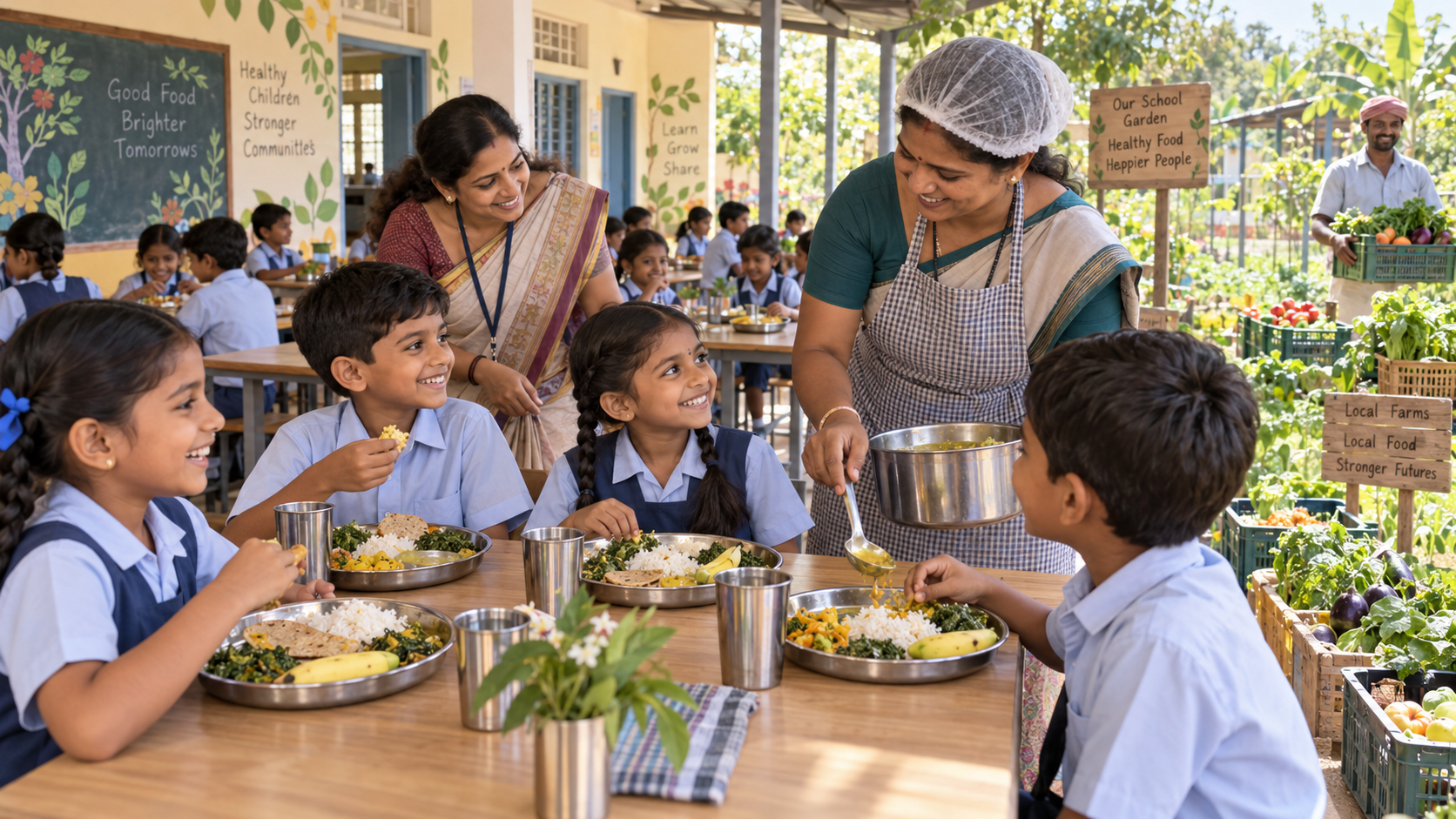
India does not have one school menu or one regional food system. Locally appropriate meals may draw on rice or other grains, pulses, vegetables, leafy greens, millets, roti, dairy, eggs, fish, or fruit according to regional traditions, nutrition standards, availability, affordability, and cultural practice.
Well-designed school purchasing can create dependable demand for farmers while improving children’s access to varied meals. That requires adult responsibility for procurement, food safety, storage, cooking, allergy planning, inclusion, and transparent evaluation. A learning garden can help children understand where food comes from, but it should complement rather than replace professional farming and a reliable school kitchen.
Priorities for India
Priorities include earlier detection of raised blood pressure, dysglycaemia and abnormal lipids; stronger maternal and child nutrition; preservation of diverse regional food traditions; healthier schools and workplaces; and better access to nutritious foods. Public communication should distinguish naturally occurring sugars in whole fruit and milk from the free sugars concentrated in sweetened drinks and many packaged foods.
People with persistent excessive thirst or urination, unexplained weight change, pregnancy-related glucose problems or a strong family history should seek clinical assessment. Population guidance cannot replace individualized medical care.
Selected authoritative sources
- ICMR–National Institute of Nutrition: Dietary Guidelines for Indians, 2024
- Indian Council of Medical Research: Nutrition
- World Health Organization South-East Asia: Management of diabetes
- UNICEF India: Overweight and obesity rising across all ages
- UNICEF Child Nutrition Report 2025: Feeding Profit
- World Health Organization: Childhood overweight and obesity
- Food and Agriculture Organization: Food-based dietary guidelines for India