Introduction
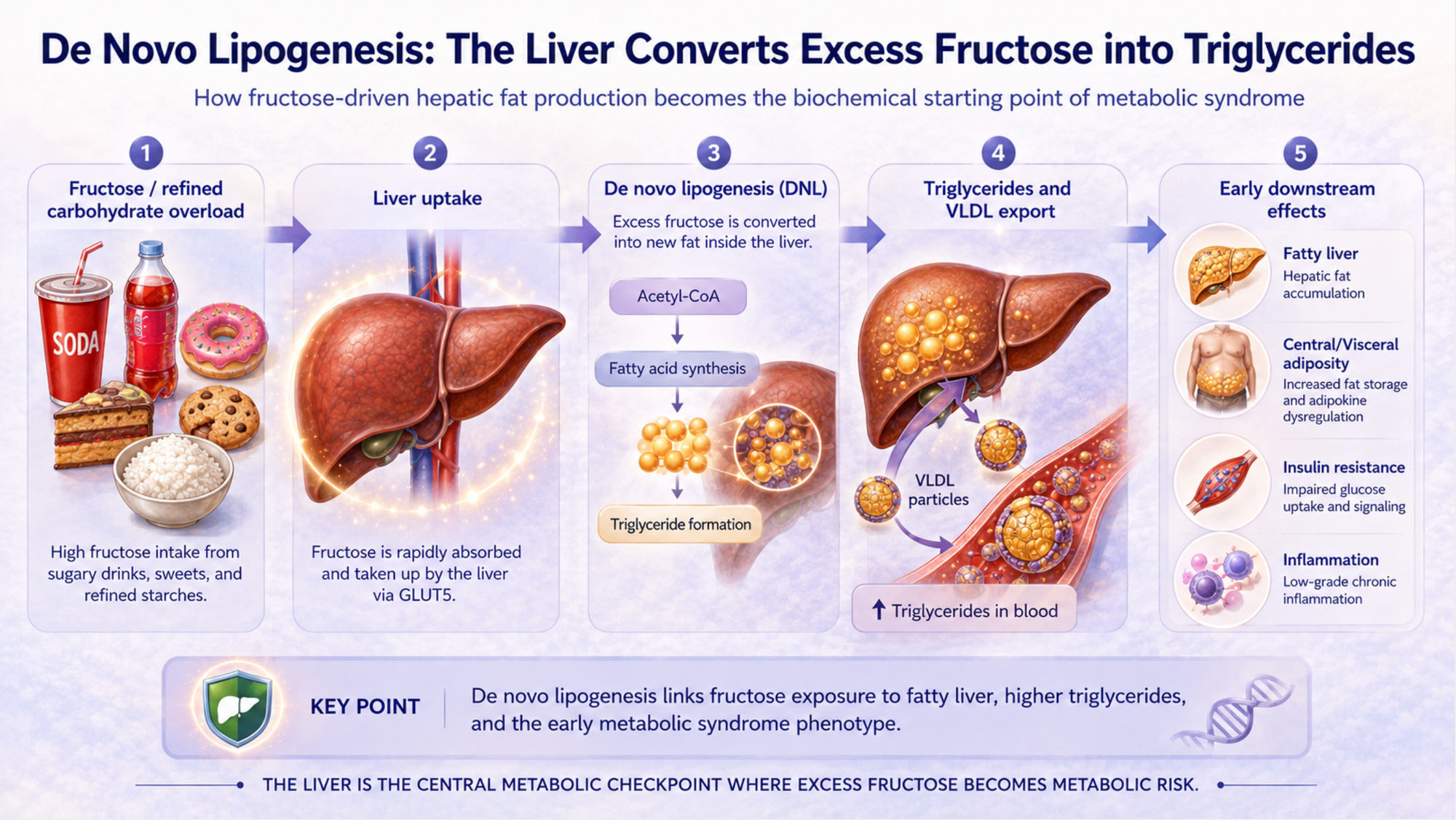
De novo lipogenesis is the metabolic process through which the body converts excess carbohydrates into fatty acids. Although this pathway occurs in several tissues, it is most active in the liver.
Under normal conditions, de novo lipogenesis contributes modestly to the body’s overall fat production. However, when carbohydrate intake is consistently high and energy needs are already met, this pathway can become more active. In such circumstances the liver may convert excess carbohydrate substrates into triglycerides, which can accumulate within liver cells or be exported into the bloodstream.
Because of its role in hepatic fat accumulation, de novo lipogenesis has become an important topic in research on metabolic disease and fatty liver.
Carbohydrates and Lipid Synthesis
When carbohydrates are consumed, they are broken down into simple sugars such as glucose and fructose. These molecules enter metabolic pathways that provide energy for cellular processes.
If energy demands are satisfied and glycogen stores are already filled, surplus carbohydrate substrates may be diverted toward lipid synthesis. Through a series of enzymatic reactions, the liver converts these substrates into fatty acids.
These fatty acids are then assembled into triglycerides, which may be:
• stored temporarily within liver cells
• exported into circulation as very-low-density lipoproteins (VLDL)
• transported to adipose tissue for long-term storage
This process allows the body to convert excess carbohydrate energy into fat.
The Liver as a Metabolic Hub
The liver occupies a central position in metabolic regulation. Nutrients absorbed from the intestine enter the portal circulation, which delivers them directly to the liver before they reach the rest of the body.
Because of this arrangement, the liver receives high concentrations of dietary carbohydrates shortly after meals. This exposure allows the liver to determine how these nutrients are processed, stored, or distributed.
When carbohydrate intake is frequent or excessive, the liver may respond by increasing lipogenesis.
Fructose and Lipogenesis
Fructose metabolism has attracted particular attention in studies of hepatic lipid synthesis.
Unlike glucose, fructose metabolism in the liver bypasses certain regulatory steps that normally help control carbohydrate processing. As a result, fructose can be converted into metabolic intermediates that feed directly into lipid synthesis pathways.
Experimental studies have shown that high fructose exposure can stimulate enzymes involved in de novo lipogenesis. These effects may increase triglyceride production within the liver.
The extent to which this mechanism contributes to metabolic disease remains an active area of research.
Liver Fat Accumulation
When triglyceride production within the liver exceeds the liver’s ability to export or oxidize fatty acids, fat may begin to accumulate within hepatocytes.
This accumulation is known as hepatic steatosis, or fatty liver.
Several processes can contribute to liver fat accumulation:
• increased de novo lipogenesis
• increased delivery of fatty acids from adipose tissue
• reduced fatty acid oxidation
• impaired export of triglycerides
Fat accumulation within the liver is a defining feature of metabolic dysfunction–associated steatotic liver disease (MASLD).
Lipids in Circulation
Triglycerides synthesized in the liver can also be packaged into very-low-density lipoprotein (VLDL) particles and released into the bloodstream.
Elevated VLDL production contributes to increased circulating triglyceride levels, a common feature of metabolic syndrome.
These lipid changes can influence cardiovascular risk by affecting cholesterol transport and arterial health.
Metabolic Context
De novo lipogenesis is only one component of the metabolic processes associated with fatty liver disease.
Other factors that influence liver fat include:
• insulin resistance
• visceral adiposity
• chronic caloric excess
• genetic susceptibility
• dietary composition
Because these processes interact, fatty liver disease is increasingly viewed as part of a broader metabolic disorder rather than an isolated liver condition.
Ongoing Research
Researchers continue to study the role of hepatic lipogenesis in metabolic disease.
Questions under investigation include:
• how different dietary patterns influence lipogenesis
• the relative contribution of fructose and glucose metabolism
• genetic factors affecting lipid synthesis pathways
• potential interventions that may reduce hepatic fat accumulation
Understanding these mechanisms may help clarify the biological pathways linking diet, liver metabolism, and cardiometabolic disease.
Related Topics
Readers interested in the metabolic pathways discussed on this page may also explore:
These pages examine the broader physiological context of hepatic lipid metabolism.
2025-2026 Evidence Update
Summary: De novo lipogenesis remains one of the key bridges between excess refined carbohydrate exposure and fatty liver biology. Fructose is especially important because hepatic fructose handling can bypass some of the tighter regulatory steps that apply to glucose, increasing pressure on ATP balance, uric acid production, triglyceride synthesis, and liver fat accumulation.
The newer MASLD literature makes this pathway more clinically visible. The 2026 ADA Standards of Care describe MASLD risk stratification with FIB-4 followed by liver stiffness measurement when FIB-4 is elevated, and discuss emerging treatments such as GLP-1 receptor agonists, tirzepatide data, and resmetirom for selected patients with F2-F3 fibrosis. For this page, the practical point is that de novo lipogenesis is not just biochemistry; it is part of the road from diet and insulin resistance to measurable liver risk.
Sources: ADA Standards of Care in Diabetes 2026, MASLD assessment and treatment section; Li Z. et al., PMID 40549205.
Related Treatment Page
For how fatty-liver biology now connects to clinical treatment pathways, see MASH treatment: resmetirom, semaglutide, and MASLD care.