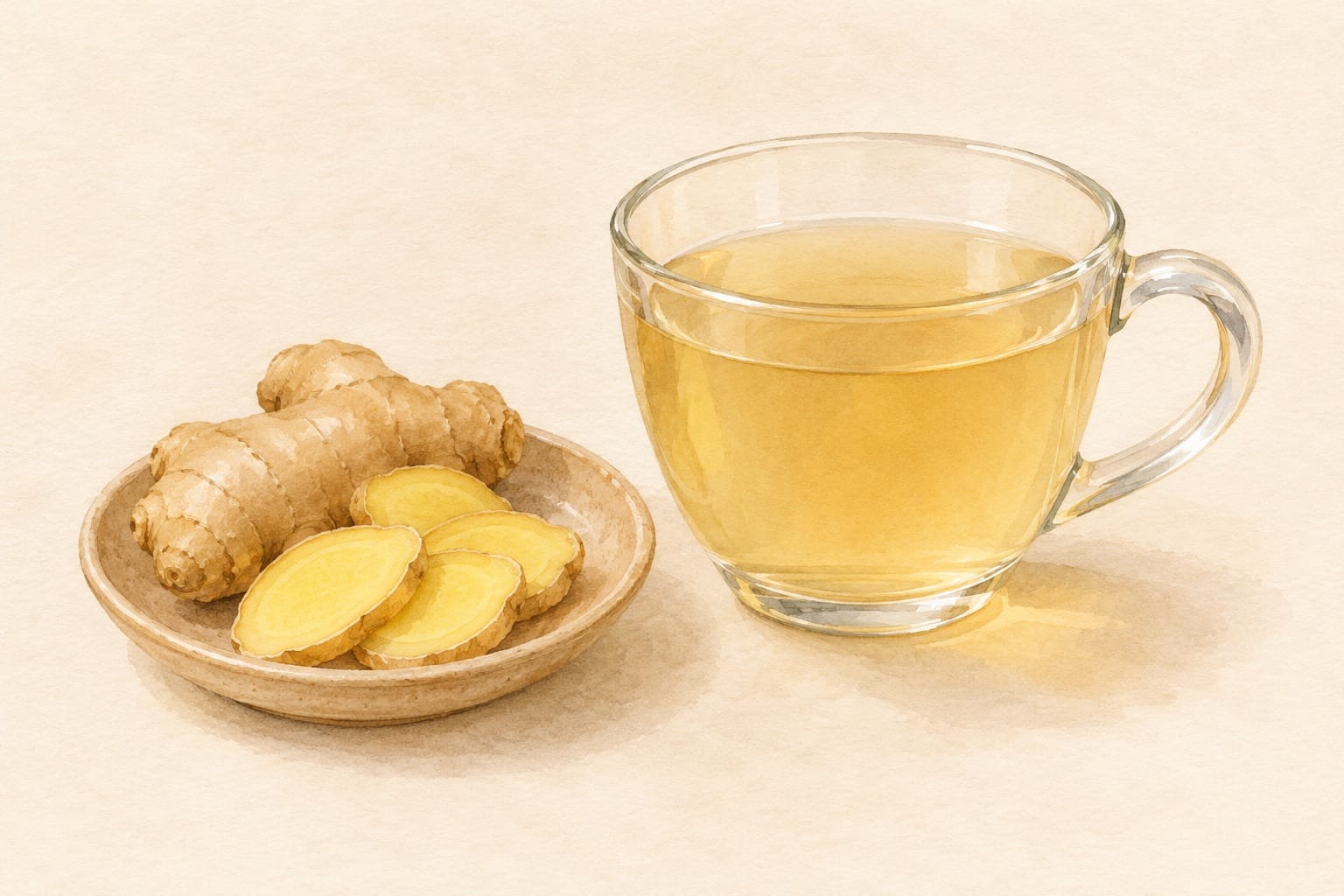
Heritage in a glass · Philippines
Fresh ginger and water can make a glass with warmth, fragrance and character. Salabat gives this simple preparation a Filipino name and a connection to a living local food tradition.
- Flavour
- Warm ginger · peppery · aromatic
- Caffeine
- No caffeine ingredients in the plain ginger-and-water recipe
- Added sugar
- 0 g added in this plain recipe
- Recipe and heritage
- Unsweetened adaptation of a drink often made with sugar.
A Filipino name, a living food tradition
The Philippine Department of Trade and Industry describes salabat as a popular hot drink prepared from fresh or powdered ginger. Ginger is called luya in Filipino. The ingredient is the rhizome, an underground stem, often informally called ginger root. Philippine Department of Trade and Industry: ginger production guide.
The DOST Industrial Technology Development Institute included salabat in work on standards for ethnic foods, reflecting its place in local home and cottage-scale production. This is a continuing food tradition, not evidence that one exact recipe has survived unchanged since antiquity. DOST–ITDI: 2013 annual report, standards for ethnic foods—salabat.
Flavour before sweetness
Expect a fragrant aroma followed by a peppery warmth. Young, mild ginger and older, more fibrous ginger can give different results. A gentle first batch is easier to adjust: dilute a strong cup with drinking water rather than automatically adding sweetener. Brown sugar and honey still change the added-sugar content.
Make a modest pitcher
Makes: about 1 litre, four 250 mL servings. Time: about 15 minutes.
- 20 g fresh culinary ginger, washed and thinly sliced; peel if preferred
- 1 litre drinking-quality water, plus a little extra boiled water if needed
- No sugar, honey, syrup, juice or sweetener
- Put the ginger and water in a clean saucepan. Bring to a boil.
- Reduce to a gentle simmer, cover loosely and simmer for 10 minutes.
- Strain. If water has evaporated, top up with freshly boiled water to about 1 litre.
- Let a hot serving cool to a comfortable drinking temperature, or cool promptly and refrigerate for a chilled version.
These are editorial household starting quantities, not a medicinal dose or a claim of one universal Filipino recipe. Fresh ginger avoids uncertainty about the sugar content of an instant mix.
Ginger is not suitable for every stomach
Ginger can cause heartburn, abdominal discomfort, diarrhoea, or mouth and throat irritation. NCCIH advises people taking medicines to discuss ginger and other herbal products with their health professional because interactions can occur. Its evidence summaries largely concern supplements; those findings do not establish the effects of this particular drink. NIH NCCIH: ginger—usefulness and safety.
Use a milder brew or choose another drink if it irritates you. Pregnancy, breastfeeding and use for children need individual guidance. Do not replace prescribed treatment with ginger tea.
Keep the ingredients clear
Plain ginger and water do not contain tea leaves. A commercial “ginger tea” may also contain black tea, sugar, flavourings or other herbs. Read the whole ingredient list rather than assuming every salabat product matches this recipe.
What “no added sugar” means
The recipe adds no sugar, honey, syrup, juice or sweetener. That is an ingredient statement, not a laboratory measurement of total sugars, calories or carbohydrate. The finished drink has not been analysed. Check commercial mixes, bottles and café preparations separately.
Prepare and serve with care
Use drinking-quality water, clean utensils and correctly identified ingredients sold for food use. Follow packet brewing instructions. For herbal infusions, use freshly boiling water and at least five minutes of infusion unless the product requires longer. BfR: boiling water for herbal infusions.
Enjoy freshly prepared. For a chilled batch, cool promptly in smaller heat-safe containers and refrigerate at 4°C / 40°F or below. As a conservative household rule adapted from general food guidance, refrigerate within two hours, or one hour above 32°C / 90°F. This is not a tested shelf life for these recipes. FDA: safe food handling.
Keeping ingredients in perspective
Water, traditional infusions, coffee and modern soft drinks all contain chemical substances. “Chemical” alone does not tell us whether something is harmful: identity, amount and individual circumstances matter. Modern sodas differ in formulation, just as traditional recipes do. Compare actual ingredients and servings rather than assuming that every soda is the same or every old recipe is safe for everyone. FDA: is food safe if it has chemicals?.
Sources and further reading
Questions about this drink
Can I make Filipino ginger tea without sugar?
Yes. This salabat adaptation uses fresh ginger and water and omits the sweetener found in many versions. It is an option when you want a warm, peppery drink instead of a sugary soft drink. Total sugar and carbohydrate have not been measured.
Does salabat contain caffeine?
This plain ginger-and-water preparation has no caffeine ingredients. Instant salabat and ginger-tea blends may add sugar, tea leaves or other ingredients. Check the label and read the guide's advice about irritation, tolerance and medicines.
Medical disclaimer
Educational resources only. Internets.com cannot provide personal medical advice, diagnosis, treatment recommendations, lab interpretation, or case review.
This information does not replace individual medical or dietary care. Consult a qualified health professional who knows your circumstances about medicines, allergies, pregnancy, breastfeeding, children, or existing illness. Do not stop or change prescribed treatment because of a beverage recipe.
Prepared 15 November 2026 · Internets Press. Household serving suggestions; no clinical reviewer is attributed.