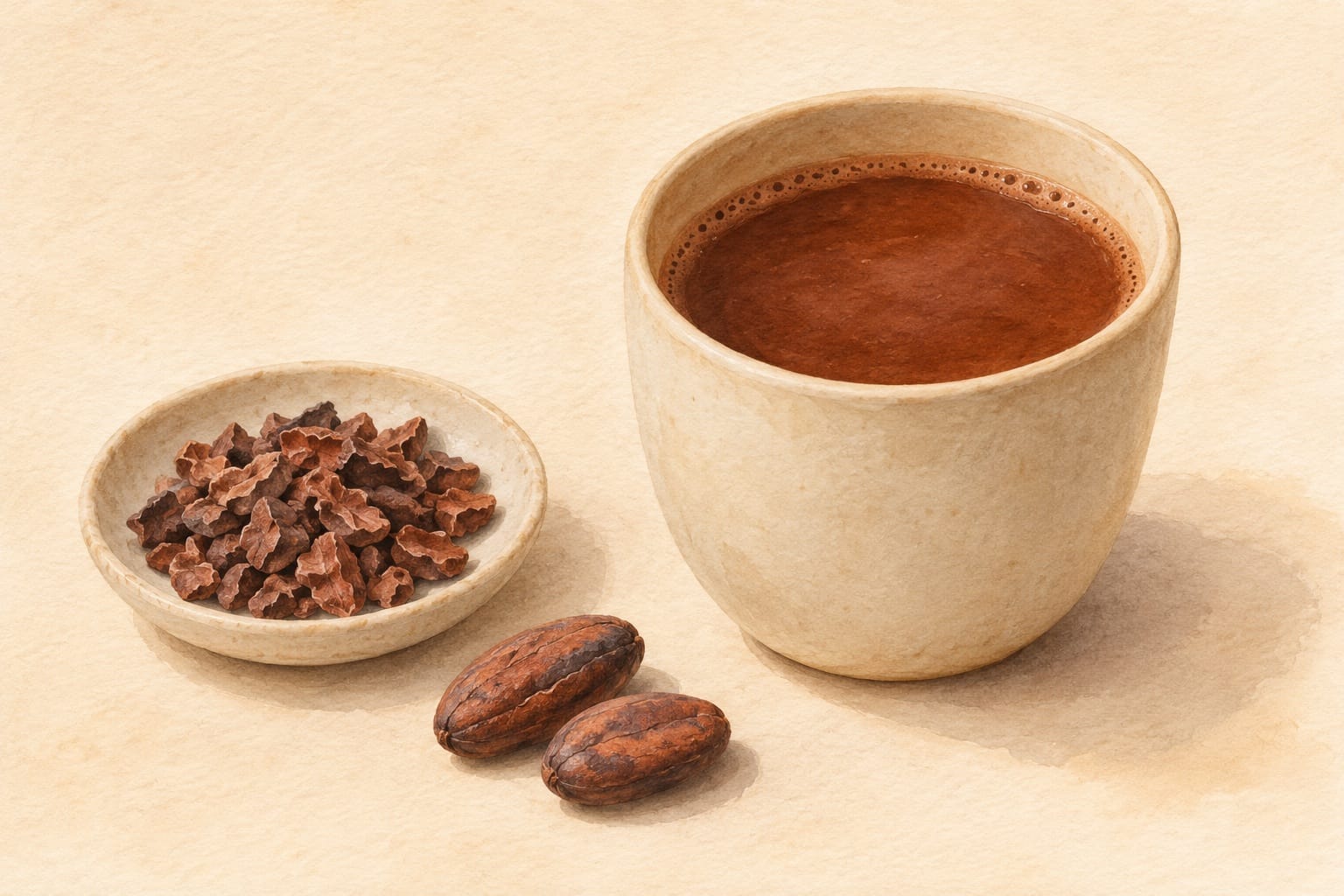
Heritage in a glass · Mesoamerica · Maya cacao heritage
Cacao has a history as a drink that reaches far beyond a sweet chocolate bar. A small unsweetened cup can foreground the roasted bean’s bitter flavour while acknowledging the Maya heritage behind the subject.
- Flavour
- Roasted cacao · bitter · full-bodied
- Caffeine
- Contains caffeine and theobromine
- Sugar
- No sugar or sweetener added; not a calorie-free drink
- Recipe and heritage
- A contemporary two-ingredient cup, not an exact ancient recipe.
Ancient evidence, living peoples
A Maya vessel dated to approximately 600–900 CE in the Metropolitan Museum of Art carries an inscription identifying it as a cup for cacao. Chemical-residue research also supports cacao use much earlier in Maya history. These are specific forms of archaeological evidence for cacao beverages. The Metropolitan Museum of Art: Maya vessel for cacao; Hurst and colleagues, Nature (2002): cacao usage by the earliest Maya civilization.
Those findings do not establish that the two-ingredient recipe below matches the contents of every vessel. Preparations and meanings varied. Maya peoples and their foodways continue today; ancient evidence should not erase that living presence.
A small bitter cup
Without sweetener, cacao tastes distinctly bitter. Start with a small serving and decide whether you enjoy that flavour. Commercial drinking-chocolate mixes often add sugar, milk powders or other ingredients. Choose a product whose ingredient list states 100% roasted cacao, rather than relying on “dark” or “ceremonial” as a nutrition description.
Whisk cacao into water
Makes: about 500 mL, four small 125 mL servings. These are editorial starting quantities, not a historic formula or therapeutic dose.
- 10 g food-grade 100% roasted, finely ground cacao paste, with no added sugar
- 500 mL drinking-quality water
- A clean saucepan and whisk; no milk, syrup or sweetener
- Bring the water to a gentle simmer in a clean saucepan.
- Add the finely ground cacao paste and whisk until dispersed. Simmer gently while whisking for about two minutes, or follow the product’s cooking instructions if they require longer.
- Pour small amounts into heat-safe cups and allow to cool before drinking. Whisk again if the solids settle.
Use a food product intended for preparation as a drink, not raw foraged seeds or a concentrated extract. This recipe uses already roasted and ground cacao; the illustration shows nibs and beans to explain the ingredient.
Cacao is not caffeine-free
Cacao contains caffeine and the related compound theobromine. The NIH’s chemistry overview identifies both; we have not analysed the amount in this recipe. NIH NIGMS: the chemistry of chocolate.
Consider sleep, caffeine sensitivity, medicines and repeated servings. Seek individual advice during pregnancy or breastfeeding. This recipe is intended for adult enjoyment, without treatment, detoxification or heart-health promises. FDA: caffeine and individual sensitivity.
Serving and storage
Use clean utensils and drinking-quality water. Follow product preparation and storage instructions. Enjoy freshly made, refrigerate opened products and chilled batches promptly at 4°C / 40°F or below, and do not treat these household recipes as having a tested shelf life. General FDA guidance uses a two-hour limit out of refrigeration, shortened to one hour above 32°C / 90°F. FDA: safe food handling.
What “no added sugar” means
No sugar, honey, syrup, juice or sweetener is added to this preparation. This describes the ingredients; it is not a laboratory measurement of total sugar, carbohydrate or calories. Coconut water in particular has natural sugar. Check packaged versions and serving sizes separately.
Keeping ingredients in perspective
Water, traditional infusions, cacao and modern soft drinks all contain chemical substances. “Chemical” alone does not tell us whether something is harmful: identity, amount and individual circumstances matter. Modern sodas differ in formulation, just as traditional recipes do. Compare actual ingredients and servings rather than assuming that every soda is the same or every old recipe is safe for everyone. FDA: is food safe if it has chemicals?.
Sources and further reading
Questions about this drink
Can I make a chocolate-flavoured drink without sugar or milk?
Yes. This recipe whisks plain 100% roasted ground cacao into water without added sugar or milk. It tastes bitter rather than sweet. Cacao contains fats and other solids, so this is not a calorie-free drink, and total sugars have not been measured.
Is cacao and water an ancient Maya recipe?
Ancient Maya cacao beverages are supported by archaeological evidence cited in this guide. The two-ingredient preparation here is a contemporary household adaptation, not a reconstruction of one exact ancient recipe. It contains caffeine and theobromine.
Medical disclaimer
Educational resources only. Internets.com cannot provide personal medical advice, diagnosis, treatment recommendations, lab interpretation, or case review.
This information does not replace individual medical or dietary care. Consult a qualified health professional who knows your circumstances about medicines, allergies, pregnancy, breastfeeding, children, or existing illness. Do not stop or change prescribed treatment because of a beverage recipe.
Prepared 15 November 2026 · Internets Press. Household serving suggestions; no clinical reviewer is attributed.