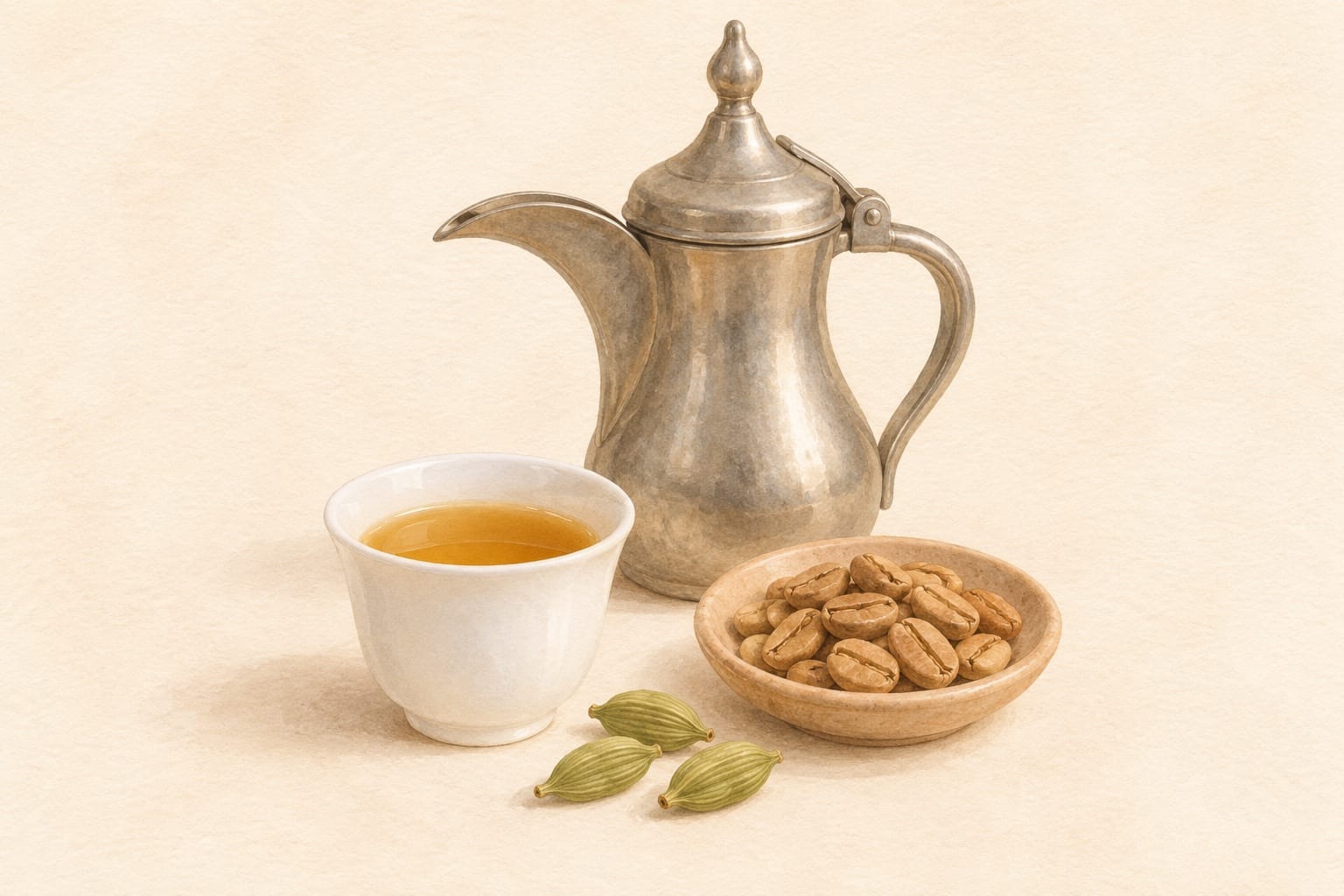
Heritage in a glass · Arabian Gulf · Emirati serving tradition
A small cup of qahwa can carry a large gesture of welcome. Coffee and its serving traditions offer another way to bring flavour, conversation and cultural meaning to the table without adding sugar.
- Flavour
- Light-roast coffee · cardamom · aromatic
- Caffeine
- Contains caffeine, even when the brew is pale
- Added sugar
- 0 g added in this plain recipe
- Recipe and heritage
- One simplified Gulf-style household version; regional recipes differ.
Hospitality carried through generations
UNESCO recognises Arabic coffee as a symbol of generosity, describing its role in gatherings, welcoming guests and passing etiquette between generations. The tradition spans multiple Arab communities; it does not belong to one modern recipe. UNESCO: Arabic coffee, a symbol of generosity.
Abu Dhabi Culture’s educational materials describe preparing and serving gahwa with specialised pots and utensils. A dallah is a coffee pot; a finjan is a small serving cup. The account connects roasting, grinding, brewing and the care given to a guest. Abu Dhabi Culture: Al Gahwa activity guide.
One style within a wider tradition
Gulf preparations often pair coffee with cardamom, and some include saffron or other spices. Roast, colour and seasoning vary across places and families. Our illustration shows a pale, light-roast version rather than claiming all Arabic coffee has that appearance. Abu Dhabi Culture: preparation of Gahwa (activity guide PDF).
The small serving and time spent sharing it are central to this page. A large modern takeaway cup is a different serving pattern. We leave out dates and other accompaniments from the recipe so the drink’s ingredients remain explicit.
Make a small sharing pot
Makes: roughly 400–500 mL after simmering, for small 40–50 mL pours. Time: about 15 minutes. Guests may prefer only one small serving.
- 15 g ground lightly roasted coffee suitable for Arabic coffee
- 3 culinary green cardamom pods, lightly crushed
- 500 mL drinking-quality water
- No sugar, syrup, milk or creamer
- Bring the water to a boil in a clean saucepan. Add the coffee carefully, reduce the heat and simmer gently for about 10 minutes. Do not leave it unattended.
- Add the crushed cardamom for the final 2 minutes. Remove from the heat and let the grounds settle briefly.
- Strain through a clean fine strainer into a heat-safe serving pot. Pour small amounts into heat-safe cups and allow to cool before drinking.
This is an editorial household adaptation of the boiling-and-seasoning method described by Abu Dhabi Culture, using ready-roasted coffee and a kitchen strainer. It does not reproduce the full traditional equipment sequence. Abu Dhabi Culture: preparation of Gahwa (activity guide PDF).
Pale does not mean caffeine-free
This drink contains caffeine. The amount varies with the beans or leaves, quantity, brewing and refills; we have not measured this recipe. Consider sleep, sensitivity and medicines, and seek individual advice during pregnancy or breastfeeding. These caffeinated recipes are intended for adults. FDA: caffeine in drinks and individual sensitivity.
Repeated small refills can add up. Keep the serving size visible and do not infer a caffeine amount from the light roast or the pale liquid. If coffee triggers reflux, reduce or avoid it according to your own symptoms and clinical advice. NIDDK: foods and drinks that may trigger reflux symptoms.
Keep the welcome, allow personal choice
Offer the drink without pressuring anyone to accept or take a refill. A guest may avoid caffeine or coffee for personal or medical reasons. Sharing the story and offering another suitable drink can be part of the hospitality too.
What “no added sugar” means
The recipe adds no sugar, honey, syrup, juice or sweetener. That is an ingredient statement, not a laboratory measurement of total sugars, calories or carbohydrate. The finished drink has not been analysed. Check commercial mixes, bottles and café preparations separately.
Prepare and serve with care
Use drinking-quality water, clean utensils and correctly identified ingredients sold for food use. Follow packet brewing instructions. For herbal infusions, use freshly boiling water and at least five minutes of infusion unless the product requires longer. BfR: boiling water for herbal infusions.
Enjoy freshly prepared. For a chilled batch, cool promptly in smaller heat-safe containers and refrigerate at 4°C / 40°F or below. As a conservative household rule adapted from general food guidance, refrigerate within two hours, or one hour above 32°C / 90°F. This is not a tested shelf life for these recipes. FDA: safe food handling.
Keeping ingredients in perspective
Water, traditional infusions, coffee and modern soft drinks all contain chemical substances. “Chemical” alone does not tell us whether something is harmful: identity, amount and individual circumstances matter. Modern sodas differ in formulation, just as traditional recipes do. Compare actual ingredients and servings rather than assuming that every soda is the same or every old recipe is safe for everyone. FDA: is food safe if it has chemicals?.
Sources and further reading
- UNESCO: Arabic coffee, a symbol of generosity
- Abu Dhabi Culture: Al Gahwa activity guide
- Abu Dhabi Culture: preparation of Gahwa (activity guide PDF)
- FDA: caffeine in drinks and individual sensitivity
- NIDDK: foods and drinks that may trigger reflux symptoms
- BfR: boiling water for herbal infusions
- FDA: safe food handling
- FDA: is food safe if it has chemicals?
Questions about this drink
What small drink can I offer a guest without added sugar?
This Gulf-style qahwa adaptation uses coffee, cardamom and water, served in small pours without sugar. It provides an aromatic hospitality option rather than a large-volume hydration drink. Regional coffee traditions and guest preferences differ.
Does pale Arabic coffee contain caffeine?
Yes. A pale colour does not make qahwa caffeine-free. Roast, quantity, brewing and repeated small refills affect exposure. We have not measured this recipe, and guests should be free to choose another drink.
Medical disclaimer
Educational resources only. Internets.com cannot provide personal medical advice, diagnosis, treatment recommendations, lab interpretation, or case review.
This information does not replace individual medical or dietary care. Consult a qualified health professional who knows your circumstances about medicines, allergies, pregnancy, breastfeeding, children, or existing illness. Do not stop or change prescribed treatment because of a beverage recipe.
Prepared 15 November 2026 · Internets Press. Household serving suggestions; no clinical reviewer is attributed.