Schools are prevention infrastructure
A school reaches children before the clinic does. It reaches them repeatedly, socially, and at a stage when habits are still being formed. That makes schools one of the most important places to teach metabolic health without turning the lesson into a medical lecture.
The first policy can be simple
A school does not need to solve every nutrition problem at once. The first step may be water as the default drink, a garden bed, a traditional foods day, a classroom lesson on sugar drinks, or a parent evening where clinicians and teachers speak together. Small steps become culture when they are repeated.
Food lessons should be practical
Students can learn by planting, measuring, cooking, drawing, interviewing elders, comparing labels, visiting markets, and discussing how food changed over time. Practical learning respects local culture and avoids the sterile feeling of a nutrition worksheet detached from real meals.
Schools can connect families and clinicians
Teachers see patterns that clinicians may only see years later. Families trust schools when schools treat them with respect. Clinicians can help by providing simple, non-alarming explanations. The Mission page belongs here: not diagnostic algorithms, but shared prevention.
A learning garden linked to local growers
Start with a manageable school plot and connect it to classroom science, food stories and supervised preparation. Adult growers can supply the wider food programme where budgets and purchasing rules allow. Children’s garden activities are education; they should not be relied upon for commercial labour or the school’s entire food supply.
FAO’s school-garden guidance provides a practical foundation. See how the learning connects to livelihoods in From Bread to Gardens: Growing a Local Food Economy.
The proposed project: a school term from food memory to local enterprise
A participating school could connect the local food economy pilot to an existing class or supervised activity. Agree the teaching time, adult responsibilities, accessible participation and garden care before starting. The aim is practical food knowledge and access, with outcomes reviewed rather than promised.
Five linked learning experiences
- Listen: interview an elder about a locally grown food, its name, preparation and place in family life. Offer school-arranged interviews so every child can participate.
- Grow: plant or observe a suitable crop, record its needs and discuss soil, water and seasonal conditions with a grower.
- Prepare: learn safe handling and preparation with adult supervision. Provide voluntary tasting, allergy planning and alternatives.
- Understand the market: follow the crop from grower to buyer. Use age-appropriate examples to distinguish the selling price from income remaining after seeds, water, labour, transport and waste.
- Share: present the learning through a story, drawing, demonstration or the proposed Rotary ancestral-food speech contest.
Agree adult responsibilities first
A school lead coordinates teaching, consent and safeguarding. Growers advise on crops and cultivation; elders share cultural knowledge. Budget for their teaching time where appropriate. A named adult maintains the plot during weekends and holidays. Commercial harvesting, orders and delivery belong to the adult production team.
Keep any school-meal purchasing arrangement separate from the learning plot. The school or programme operator must review supplier requirements, food safety, procurement rules, quantities and payment terms before ordering. Educational participation does not commit a school to buy produce.
Include families without adding financial pressure
Provide essential materials through the programme. Children should not need to purchase costumes, ingredients or equipment to take part. Support local languages and accessible formats. Obtain appropriate consent before publishing children’s names, photographs or recordings, and avoid weight-based competitions or pressured eating.
Review learning and access each term
Record participation, practical growing and preparation skills, and what children can explain about a food’s cultural history and journey to market. Review whether produce is accessible and affordable to participating families. Dietary or clinical evaluation needs an appropriate method and qualified oversight; classroom participation alone cannot establish improved diabetes or obesity outcomes.
Use FAO’s school-garden guidance for practical planning. Continue with the six-week Rotary contest proposal, first partner meeting checklist, and funding routes for agency review.
What a community can do now
- Make water visible and easy to choose.
- Start one garden bed or container garden.
- Invite grandparents or local growers to talk about traditional foods.
- Create a student ambassador program for water, gardens, and healthier school events.
Supporting pages for this Mission goal
- Water-First Schools
- School Gardens and Food Memory
- Healthier School Meals
- Student Ambassadors for Metabolic Health
Regional inspiration: local food on the school table in India
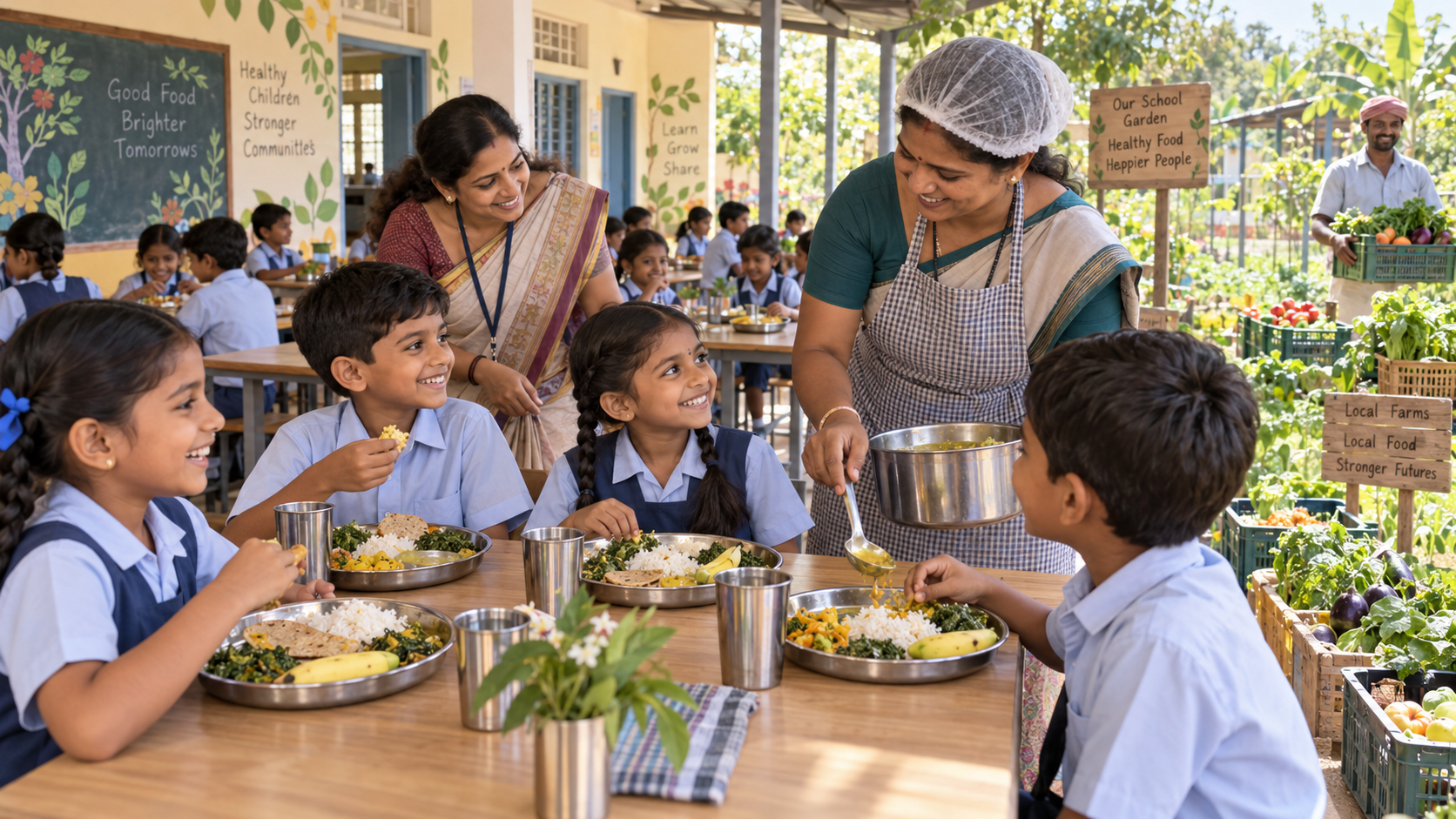
Imagine a school where freshly prepared, varied meals and safe drinking water are part of everyday learning. Rice or locally appropriate grains, pulses, vegetables and seasonal fruit can anchor the planning conversation. Menus should reflect regional food traditions, children’s needs, food-safety standards and the school’s actual resources.
The practical invitation is to give nutritious meals more space than heavily marketed packaged snacks and sugary drinks, while building dependable relationships with local growers. Teachers, cooks, families and qualified nutrition professionals should shape the plan together. A learning garden can help children understand their food; adult growers and kitchens remain responsible for reliable supply and preparation.
The books help carry the Mission farther.
Internets Press books turn the science of fructose, fatty liver, insulin resistance, diabetes, and food-system change into practical education for families, schools, clinicians, civic groups, and communities.
Science and Mission work together
Mission pages focus on prevention, education, food culture, and community action. Clinical pages focus on diagnosis, biomarkers, professional education, and disease management.
Looking for physician-level evidence, diagnostic tools, or clinical references? Visit Clinical Resources.
Want the mechanisms? Visit Metabolic Science for fructose metabolism, liver pathways, uric acid, insulin resistance, and disease biology.
Educational note: This page is for public education and community planning. It does not diagnose or treat disease. People with medical questions should work with qualified healthcare professionals.