Introduction
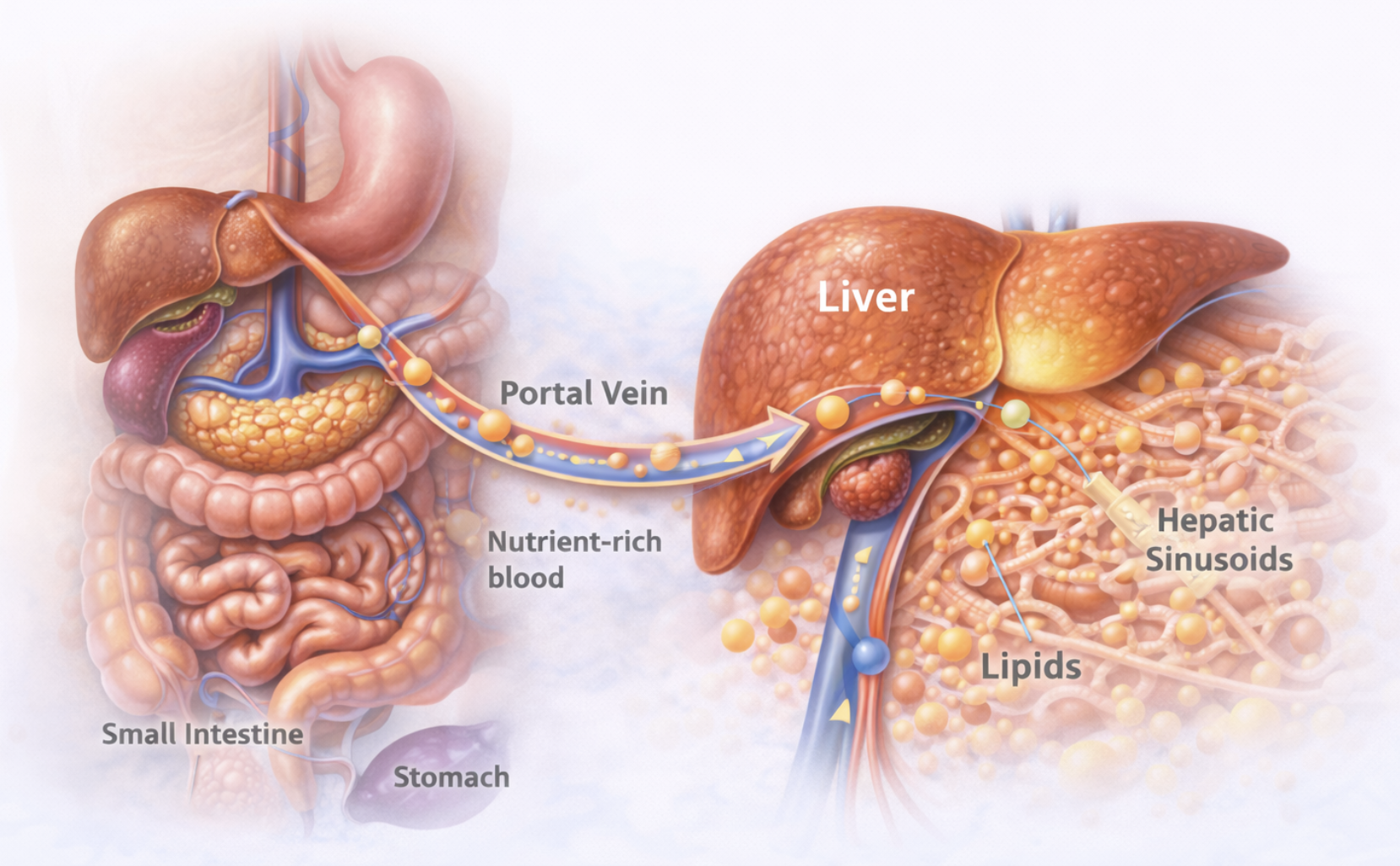
One of the most important anatomical features of human metabolism is the portal circulation, the vascular system that carries nutrients from the digestive tract directly to the liver.
After food is digested and absorbed in the intestine, nutrients do not immediately enter the general bloodstream. Instead, most carbohydrates, amino acids, and other absorbed molecules are transported first to the liver through a specialized vessel known as the portal vein.
Because of this arrangement, the liver acts as the body’s primary metabolic checkpoint. It determines how nutrients are processed, stored, or redistributed before they reach the rest of the body.
This function has led some researchers to describe the liver as a metabolic gate between the intestine and systemic circulation.
The Portal Circulation
The portal vein collects blood from several organs involved in digestion, including:
• the small intestine
• the stomach
• the pancreas
• the spleen
This blood is rich in nutrients that have just been absorbed from food.
Rather than traveling directly to the heart, portal blood flows first to the liver. Within the liver it enters a network of specialized capillaries known as hepatic sinusoids, where hepatocytes are exposed to the absorbed nutrients.
This unique circulatory pathway allows the liver to regulate metabolic processing before nutrients are distributed throughout the body.
Nutrient Processing in the Liver
Once portal blood enters the liver, hepatocytes begin processing the nutrients delivered from the intestine.
The liver can perform several functions at this stage:
• converting glucose to glycogen for storage
• synthesizing fatty acids from excess carbohydrate
• producing lipoproteins that transport lipids in the bloodstream
• converting amino acids into metabolic intermediates
• detoxifying compounds absorbed from food
These processes allow the liver to buffer sudden changes in nutrient intake and maintain metabolic stability.
Carbohydrates and the Portal Vein
Carbohydrates absorbed from the intestine are transported through the portal vein primarily in the form of glucose and fructose.
Glucose can be used directly by many tissues throughout the body, but fructose metabolism occurs largely within the liver.
Because the portal vein delivers fructose to the liver in high concentrations shortly after meals, hepatic metabolism plays a particularly important role in processing this sugar.
This pathway explains why many metabolic studies examining fructose metabolism focus on hepatic biochemical processes.
Portal Circulation and Metabolic Disease
Because the portal vein delivers nutrients directly from the intestine to the liver, the liver is exposed to high concentrations of dietary substrates.
Under conditions of chronic caloric excess or high intake of refined carbohydrates, the liver may experience sustained metabolic stress.
This stress can contribute to several metabolic disturbances, including:
• increased lipid synthesis
• accumulation of fat within hepatocytes
• altered glucose regulation
• increased production of circulating lipoproteins
Over time these changes may play a role in the development of fatty liver disease, insulin resistance, and metabolic syndrome.
The Liver’s Strategic Position
The portal circulation places the liver at a strategic intersection between digestion and systemic metabolism.
By controlling how nutrients are processed before they enter the broader circulation, the liver exerts powerful influence over the body’s metabolic environment.
This central role explains why disturbances in hepatic metabolism can affect multiple organs, including the pancreas, adipose tissue, and cardiovascular system.
Understanding the portal circulation therefore provides important insight into the broader physiology of metabolic disease.
Related Topics
Readers interested in the metabolic processes discussed on this page may also explore:
• Fatty Liver Disease (MASLD)
These topics examine the downstream metabolic consequences of hepatic nutrient processing.