Childhood obesity, modern food, and the power of ancestral food
An NGO and community call to protect children from ultra-processed food, revive ancestral food pride, and prevent early adult disease.
Children are not failing. Food environments are failing children.
Modern childhood obesity is not a story about weak willpower. It is a story about a food system that reaches children early, surrounds families with sweet and highly processed products, and teaches children to prefer soft, fast, branded foods before they can read a label.
The good news is that communities still have a powerful tool: food memory. Every culture has first foods, family meals, roots, greens, fish, beans, eggs, fruits, soups, stews, porridges, and harvest traditions that helped children grow before the modern snack aisle became normal.
This project asks a simple question:
What did our children eat before the market taught us otherwise?
Why this matters now
The World Health Organization reported that in 2024, 35 million children under age 5 were overweight, and that in 2022 more than 390 million children and adolescents aged 5–19 were overweight, including 160 million living with obesity. WHO also describes obesity as a chronic, relapsing disease shaped by biology, eating behavior, access to healthy diets, market forces, and broader environments. [1]
UNICEF’s 2025 child nutrition report made the shift even clearer: obesity has now surpassed underweight as the more common form of malnutrition among school-age children and adolescents globally, affecting 1 in 10 — about 188 million — children and adolescents. UNICEF warned that ultra-processed and fast foods are shaping children’s diets through unhealthy food environments, rather than personal choice. [2]
In island communities, the issue is immediate. UNICEF identified several Pacific Island countries among the highest childhood obesity settings in the world and linked these levels to a shift from traditional diets to cheap, energy-dense imported foods. [2]
On Guam, the Children’s Healthy Living study found that more than 27% of children aged 2–8 were affected by overweight or obesity. The University of Guam summary of the study highlighted patterns including sugary drinks, processed foods, screen time, sleep disturbance, food insecurity, and poverty. [3]
This is not a distant global issue. It is visible wherever imported, ultra-processed foods crowd out family foods that once sustained children.
The high chair is the first classroom
The obesity pathway can begin much earlier than most people think.
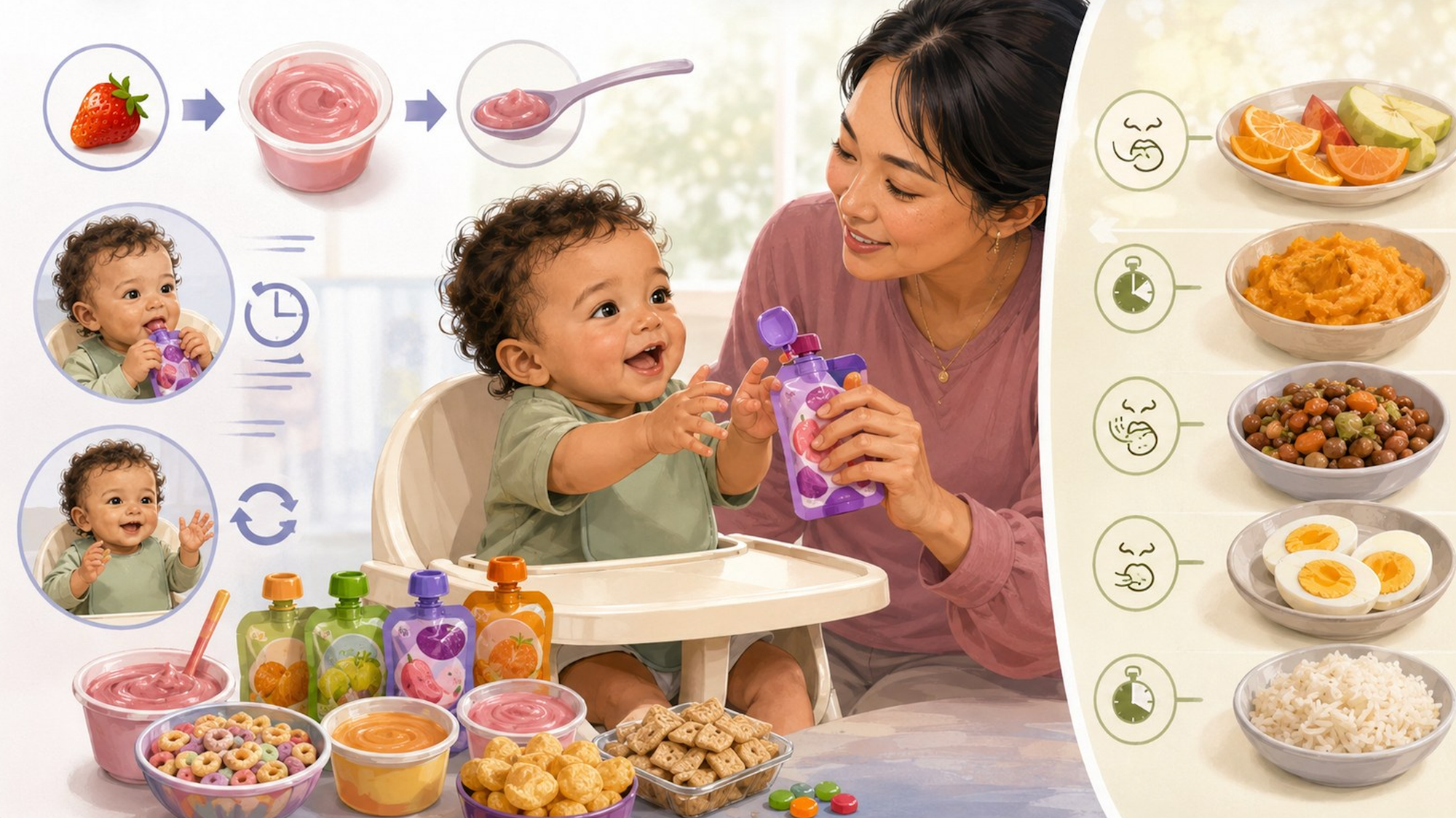
The transition from breast milk or formula into complementary foods usually begins around 6 months and continues through 6–23 months. This is when babies and toddlers learn taste, texture, chewing, satiety, spoon use, cup drinking, family meals, and the foods their parents and grandparents recognize.
This early window should teach:
- texture and chewing, not only sucking;
- water before sweet drinks;
- vegetables, roots, beans, lentils, eggs, fish, meat, fruit, and family foods;
- satiety, patience, and shared meals;
- trust in the foods of home.
Instead, many families meet a wall of bright packages, pouch caps, animal mascots, health-halo claims, and “no added sugar” messaging.
The concern is not occasional convenience. Parents are busy. Travel happens. A pouch now and then is not the issue.
The concern is the daily pattern: sweet, soft, fast, repeatable, and marketed as healthy.
A pouch is not just food. It is a delivery system.
WHO’s complementary feeding guideline for children 6–23 months recommends diverse diets and states that foods high in sugar, salt, and trans fats should not be consumed; sugar-sweetened beverages should not be consumed; and fruit juice should be limited. [4]
A study of 276 commercial infant squeeze pouches found that only two products were nutritionally adequate by the study’s profiling tool, and that 59% made “no added sugar” claims despite containing free sugars. [5]
A 2024 study in The American Journal of Clinical Nutrition found that among infants who consumed pouches, pouches provided 25.5% of total energy from complementary foods, and almost half of total sugars from complementary foods came from pouches. [6]
The market reaches the high chair before the grandparent does. NGOs can help put the grandparent back in the story.
Parents are not the villains
Any successful community campaign must avoid blame. Parents and caregivers are often doing their best under pressure: time, cost, commuting, shift work, school schedules, food prices, food insecurity, and marketing that makes processed foods look nurturing and scientific.
The solution is not to shame parents. The solution is to change the defaults and give families practical support:
- make water normal;
- make real food visible;
- make traditional foods a source of pride;
- make school projects family-centered;
- make elders part of the health team;
- make children proud of foods their ancestors knew.
A simple parent-facing message is:
Front labels sell. Back labels tell. Family foods teach.
What the literature says
1. Childhood obesity is now a global malnutrition crisis
The most defensible public message is not “children eat too much.” It is that food environments are changing around children. WHO describes obesity as shaped by market forces and broader environments, and UNICEF states that ultra-processed foods are increasingly replacing fruits, vegetables, and protein in children’s diets. [1] [2]
2. Marketing changes what children want
A JAMA Pediatrics systematic review and meta-analysis of 96 studies found that food marketing was associated with increased food intake, food choice, preference, and purchase requests among children and adolescents. [7]
Before a child can read a nutrition label, the food industry may already have taught the child what to want.
3. Sugary drinks are one of the clearest targets
A 2025 U.S. Nutrition Evidence Systematic Review concluded that sugar-sweetened beverage consumption by infants, children, and adolescents is associated with unfavorable growth patterns, body composition, and higher risk of obesity from childhood into early adulthood, with evidence graded as moderate. [8]
WHO recommends reducing free sugars to less than 10% of total energy intake, and suggests a further reduction below 5%. [9]
The simplest first swap is:
Water before sweet drinks.
4. Ultra-processed foods are linked with childhood adiposity
A 2024 prospective cohort study in BMC Medicine followed 962 Chilean preschool children. At age 4, ultra-processed foods represented 48% of total calories; higher ultra-processed food consumption was associated with higher BMI z-score, waist circumference, fat mass, and percentage fat mass two years later. [10]
5. Adult-type diseases are appearing earlier
Childhood obesity is connected with earlier risk for adult-type metabolic disease. A JAMA Network Open systematic review and meta-analysis found that 75.27% of children with type 2 diabetes had obesity, and 77.24% had obesity at diagnosis. [11]
Fatty liver disease is another concern. Pediatric guidelines from NASPGHAN describe pediatric fatty liver disease as associated with insulin resistance, obesity, and dyslipidemia, and recommend lifestyle modification as first-line treatment. They also recommend avoiding sugar-sweetened beverages to decrease adiposity. [12]
The cirrhosis message should be phrased carefully: advanced fibrosis or cirrhosis is not common in young children, but childhood fatty liver disease can begin a pathway toward fibrosis and later liver disease if the drivers are not reversed.
6. School, family, and culture can become protective forces
The proposed NGO project — an ancestral food speech contest — should be described as evidence-informed, not as a single proven medical treatment.
It combines several well-supported ideas:
- school nutrition education;
- family meals;
- school gardens and food literacy;
- intergenerational learning;
- cultural identity;
- community pride;
- repeated exposure to real foods.
A randomized controlled trial of school gardens and curriculum in 46 low-income elementary schools found improvements in fruit and vegetable consumption at school when implementation was stronger. [13]
A meta-analysis of 57 studies with more than 200,000 participants found that more frequent family meals were associated with better diet quality and lower BMI in children. [14]
A 2024 scoping review found that interventions using native foods showed promise for improving health, nutritional outcomes, cultural identity, and food security. [15]
An intergenerational food and agricultural education study found that programs connecting students with parents and grandparents promoted dialogue across generations and helped pass on food knowledge, culture, and life experience. [16]
The NGO project: Pride & Ancestral Food Speech Contest
The project is simple enough for schools and powerful enough for communities.
Goal
Help children learn that healthy food is not only a medical instruction. It is also identity, history, pride, family, and love.
Core assignment
Each student chooses one ancestral or family food and prepares a short speech answering:
- What is this food?
- Who in your family or community remembers it?
- Where did it come from?
- How was it grown, caught, gathered, cooked, or shared?
- Why is it healthier than a modern processed replacement?
- What is one small food change your family could try this week?
Suggested speech length
- Grades 3–5: 2 minutes
- Middle school: 3 minutes
- High school: 4 minutes
Suggested prizes
Small prizes are enough. The prize should honor pride, not wealth.
- Best Grandparent Interview
- Best First-Food Story
- Best Water-Before-Sweet-Drinks Message
- Best Local Food History
- Best Garden or Farming Story
- Best Healthy Swap
- Best Family Recipe Revival
- Best Speech by a First-Time Speaker
- NGO Community Health Award
Sample student titles
- “What Did Babies Eat Before Pouches?”
- “My Grandmother’s First Food”
- “The Food My Family Forgot”
- “Water Before Sweet Drinks”
- “Why Taro, Breadfruit, Beans, Fish, Eggs, and Greens Still Matter”
- “Ancestral Food Is Future Food”
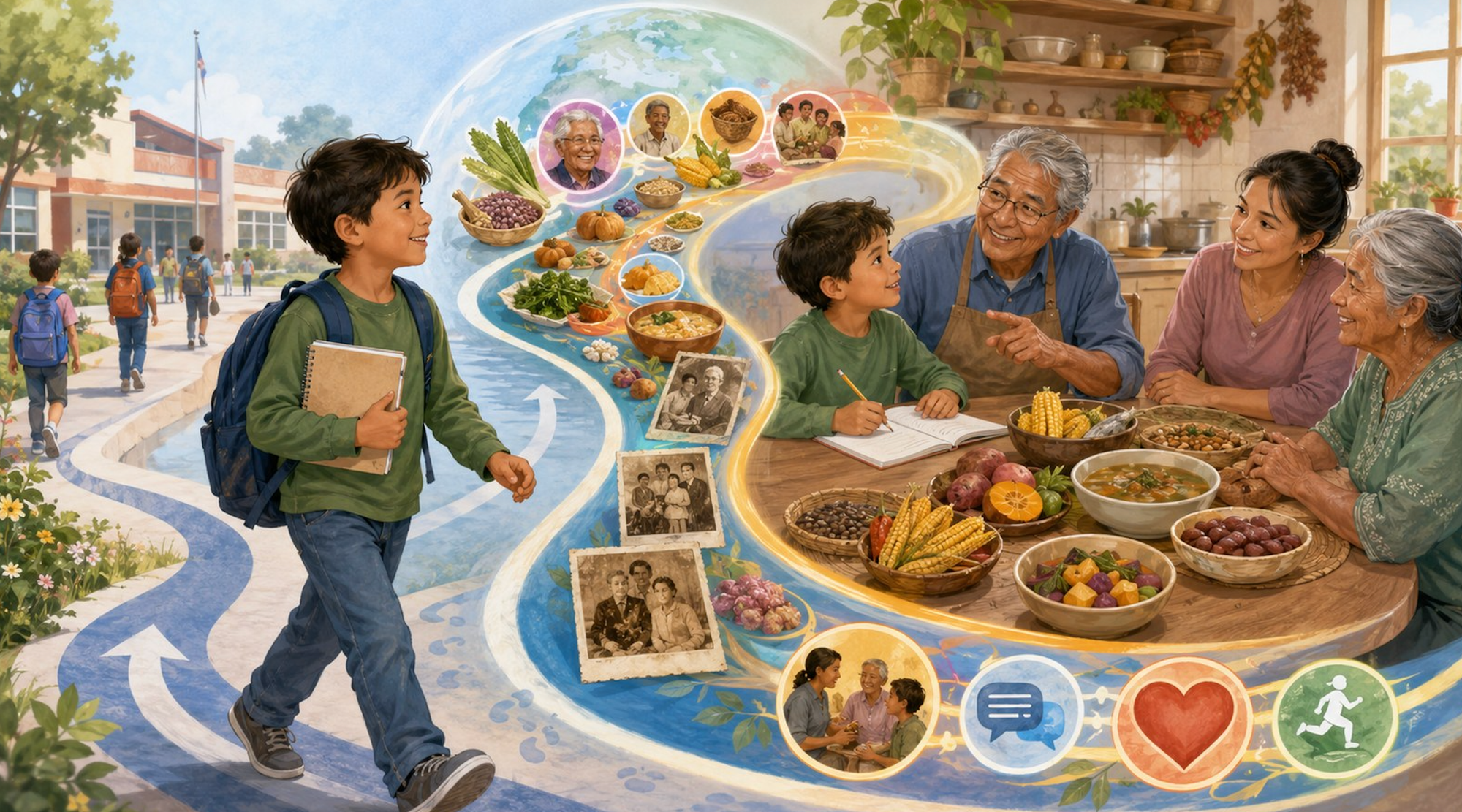
The contest works because it sends a child home with a question:
Grandma, Grandpa, Auntie, Uncle — what did children eat before the market changed our food?
That question can open a conversation that no pamphlet can create.
Practical food messages for families
These are not strict medical rules. They are practical defaults that fit a public health campaign.
For infants and toddlers
- Keep breastfeeding going where possible and desired.
- Start complementary foods around 6 months under health guidance.
- Move gradually from purées to mashed foods, soft finger foods, and family foods.
- Do not train babies only on sweet, smooth, squeezable foods.
- Avoid sugar-sweetened beverages.
- Use water as the normal drink after age-appropriate introduction.
- Prioritize iron-rich foods, vegetables, roots, beans, lentils, fish, eggs, meats, fruits, and family foods.
For school-age children
- Water before sweet drinks.
- Whole fruit before juice.
- Real meals before snack packs.
- Family foods before branded foods.
- Gardens before vending machines.
- Cooking skills before convenience dependence.
- Pride before shame.
What NGOs and partners can do
NGOs, schools, health professionals, elders, farmers, churches, youth groups, cultural organizations, and local businesses can each take one part.
NGOs can provide
- contest prizes;
- certificates;
- volunteer judges;
- water bottles;
- school garden supplies;
- printing for recipe cards;
- a community tasting table;
- speaker coaching;
- links to nurses, dietitians, physicians, farmers, and elders.
Schools can provide
- the student assignment;
- a stage or classroom showcase;
- teacher guidance;
- poster displays;
- a family interview worksheet;
- optional integration with science, social studies, language arts, and health.
Families and elders can provide
- stories;
- recipes;
- food memories;
- language;
- plants and seeds;
- kitchen skills;
- identity.
Health professionals can provide
- simple disease-prevention framing;
- guidance on sugar-sweetened beverages;
- respectful obesity prevention messaging;
- age-appropriate infant feeding advice;
- support for families without shame.
A low-cost launch plan
Month 1: Invite partners
Choose one school or youth organization. Invite teachers, parent leaders, elders, a nurse or dietitian, and NGO volunteers.
Month 2: Send home the question
Give every student a one-page interview sheet:
“Ask an elder: What did children in our family eat before packaged snacks, sweet drinks, and pouches became normal?”
Month 3: Hold the speech contest
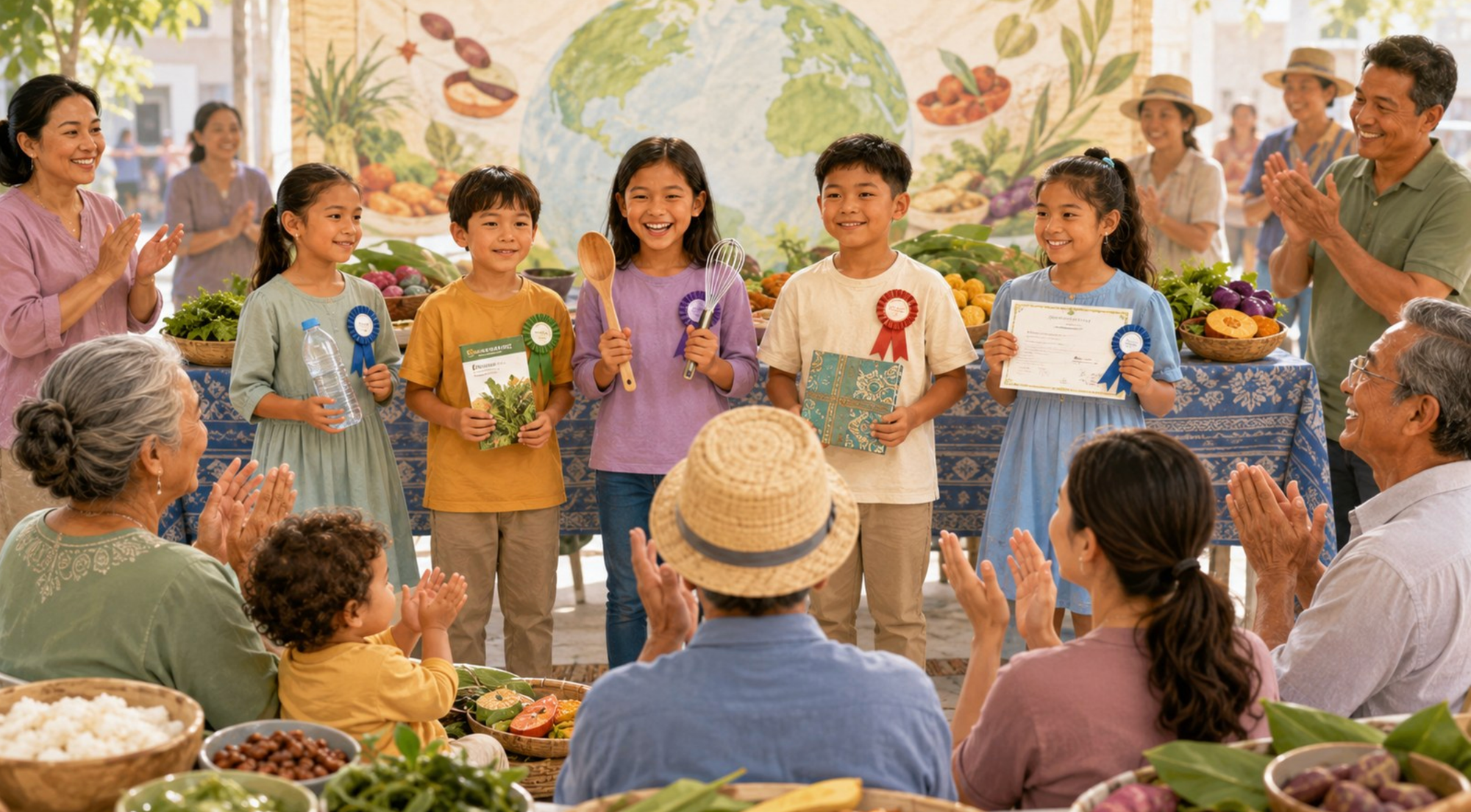
Make it joyful. Display foods, photos, drawings, and family stories. Give small prizes. Celebrate every child who speaks.
Month 4: Keep one habit alive
Choose one community habit to repeat:
- water-before-sweet-drinks week;
- ancestral food day;
- school garden planting;
- family recipe wall;
- no-sweet-drink pledge;
- elder food story day.
How to measure success
This does not need to begin as a complex research project. Start with simple, visible measures.
Track:
- number of students participating;
- number of elder interviews completed;
- number of family recipes collected;
- number of ancestral foods identified;
- number of students who can name one healthy swap;
- number of families pledging water before sweet drinks;
- number of school or community tasting events;
- number of local partners involved.
Later, partners can add formal evaluation, such as pre/post student knowledge, beverage habits, vegetable exposure, family meal frequency, or school food-environment changes.
The message to carry forward
Childhood obesity is not a failure of children. It is a warning that food environments have changed faster than families, schools, and health systems could respond.
The solution is not shame. The solution is protection, memory, pride, and community action.
The market has reached babies in the high chair. It has reached children through screens, shelves, mascots, sweet drinks, and convenience foods. But grandparents, parents, teachers, doctors, farmers, and NGO volunteers can still reach children too.
Ancestral food is not the past. It is one path to a healthier future.
<a id="references"></a>
References
- World Health Organization. “Obesity and overweight.” Updated 8 December 2025. https://www.who.int/news-room/fact-sheets/detail/obesity-and-overweight
- UNICEF. “Obesity exceeds underweight for the first time among school-age children and adolescents globally.” 10 September 2025. https://www.unicef.org/press-releases/obesity-exceeds-underweight-first-time-among-school-age-children-and-adolescents
- Leon Guerrero RT, Barber LR, Aflague TF, Paulino YC, Hattori-Uchima MP, Acosta M, Wilkens LR, Novotny R. “Prevalence and Predictors of Overweight and Obesity among Young Children in the Children’s Healthy Living Study on Guam.” Nutrients. 2020;12(9):2527. https://www.mdpi.com/2072-6643/12/9/2527
- World Health Organization. “WHO guideline for complementary feeding of infants and young children 6–23 months of age.” 2023. https://www.ncbi.nlm.nih.gov/books/NBK596430/
- Brunacci KA, et al. “The big squeeze: a product content and labelling analysis of ready-to-use complementary infant food pouches in Australia.” BMC Public Health. 2023. https://link.springer.com/article/10.1186/s12889-023-15492-3
- Haszard JJ, et al. “Contribution of Infant Food Pouches and Other Commercial Infant Foods to Nutrient Intake in Infants.” The American Journal of Clinical Nutrition. 2024. https://www.sciencedirect.com/science/article/pii/S0002916524002764
- Boyland E, et al. “Association of Food and Nonalcoholic Beverage Marketing With Children and Adolescents’ Eating Behaviors and Health.” JAMA Pediatrics. 2022;176(7):e221037. https://jamanetwork.com/journals/jamapediatrics/fullarticle/2791859
- USDA Nutrition Evidence Systematic Review. “What is the relationship between sugar-sweetened beverage consumption and growth, body composition, and risk of obesity?” 2025 Dietary Guidelines Advisory Committee systematic review. https://nesr.usda.gov/2025-dietary-guidelines-advisory-committee-systematic-reviews/sugar-sweetened-beverages_growth-obesity
- World Health Organization. “Reducing consumption of sugar-sweetened beverages to reduce the risk of childhood overweight and obesity.” https://www.who.int/tools/elena/interventions/ssbs-childhood-obesity
- Zancheta C, et al. “The consumption of ultra-processed foods was associated with adiposity, but not with metabolic indicators in a prospective cohort study of Chilean preschool children.” BMC Medicine. 2024. https://link.springer.com/article/10.1186/s12916-024-03556-z
- Cioana M, et al. “The Prevalence of Obesity Among Children With Type 2 Diabetes: A Systematic Review and Meta-analysis.” JAMA Network Open. 2022;5(12):e2247186. https://jamanetwork.com/journals/jamanetworkopen/fullarticle/2799572
- Vos MB, et al. “NASPGHAN Clinical Practice Guideline for the Diagnosis and Treatment of Nonalcoholic Fatty Liver Disease in Children.” Journal of Pediatric Gastroenterology and Nutrition. 2017. https://pmc.ncbi.nlm.nih.gov/articles/PMC5413933/
- Wells NM, et al. “The effects of school gardens on fruit and vegetable consumption at school: A randomized controlled trial with low-income elementary schools in four U.S. states.” Preventive Medicine Reports. 2023. https://www.sciencedirect.com/science/article/pii/S2211335522003606
- Dallacker M, Hertwig R, Mata J. “The frequency of family meals and nutritional health in children: a meta-analysis.” Obesity Reviews. 2018. https://pubmed.ncbi.nlm.nih.gov/29334693/
- “Interventions and Programs Using Native Foods to Promote Health: A Scoping Review.” 2024. https://pmc.ncbi.nlm.nih.gov/articles/PMC11644025/
- Wang PC, et al. “Participation in Intergenerational Food and Agriculture Education: Impact on Students’ Affection for Their Learning Environment.” International Journal of Environmental Research and Public Health. 2023. https://www.mdpi.com/1660-4601/20/5/4616